
Last updated November 23, 2026
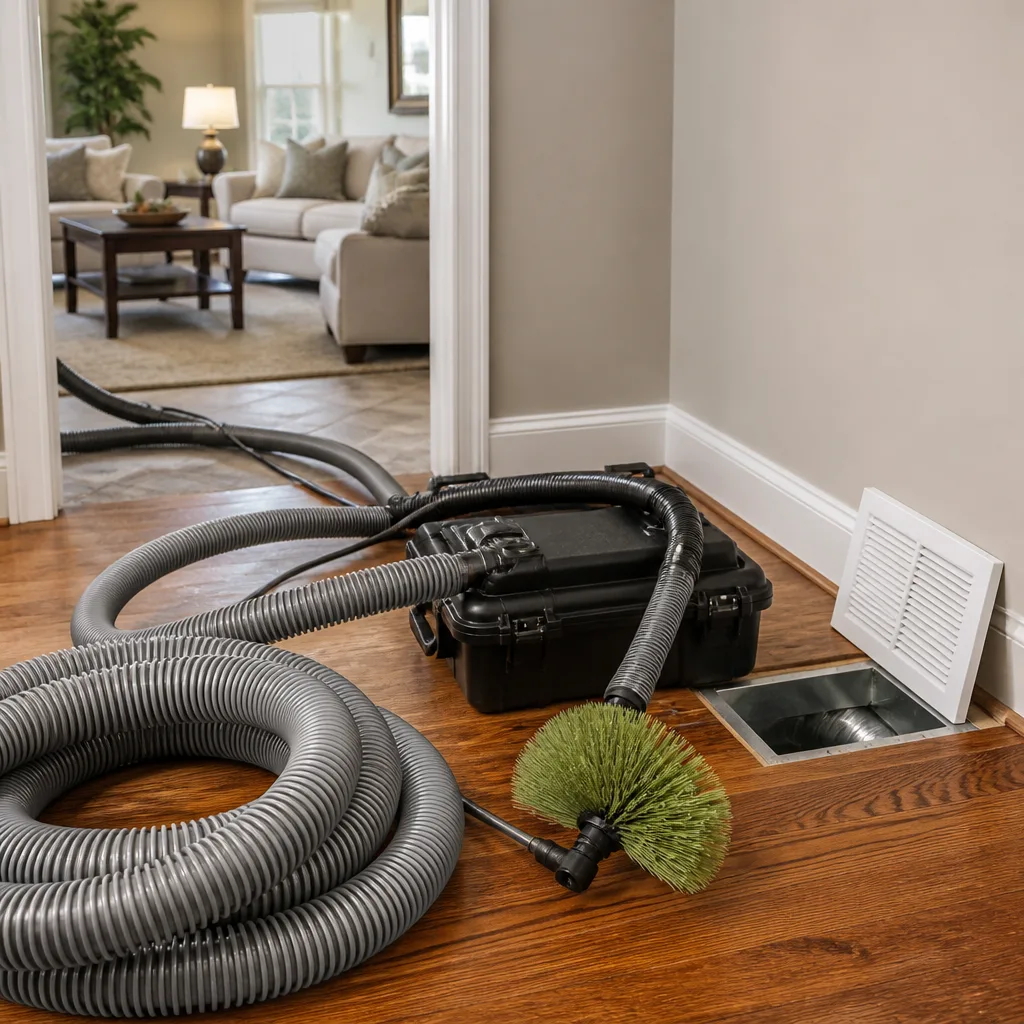 Whole-home duct cleaning
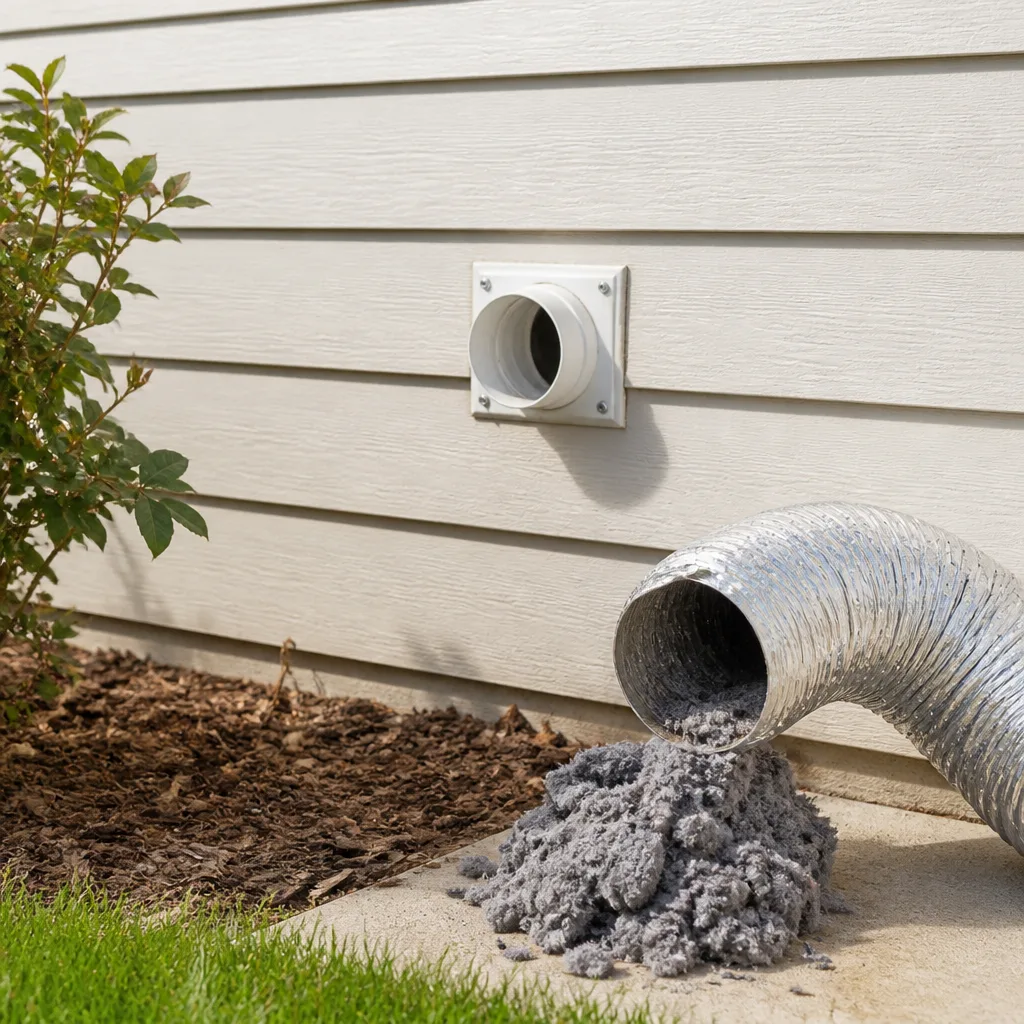 Dryer vent cleaning
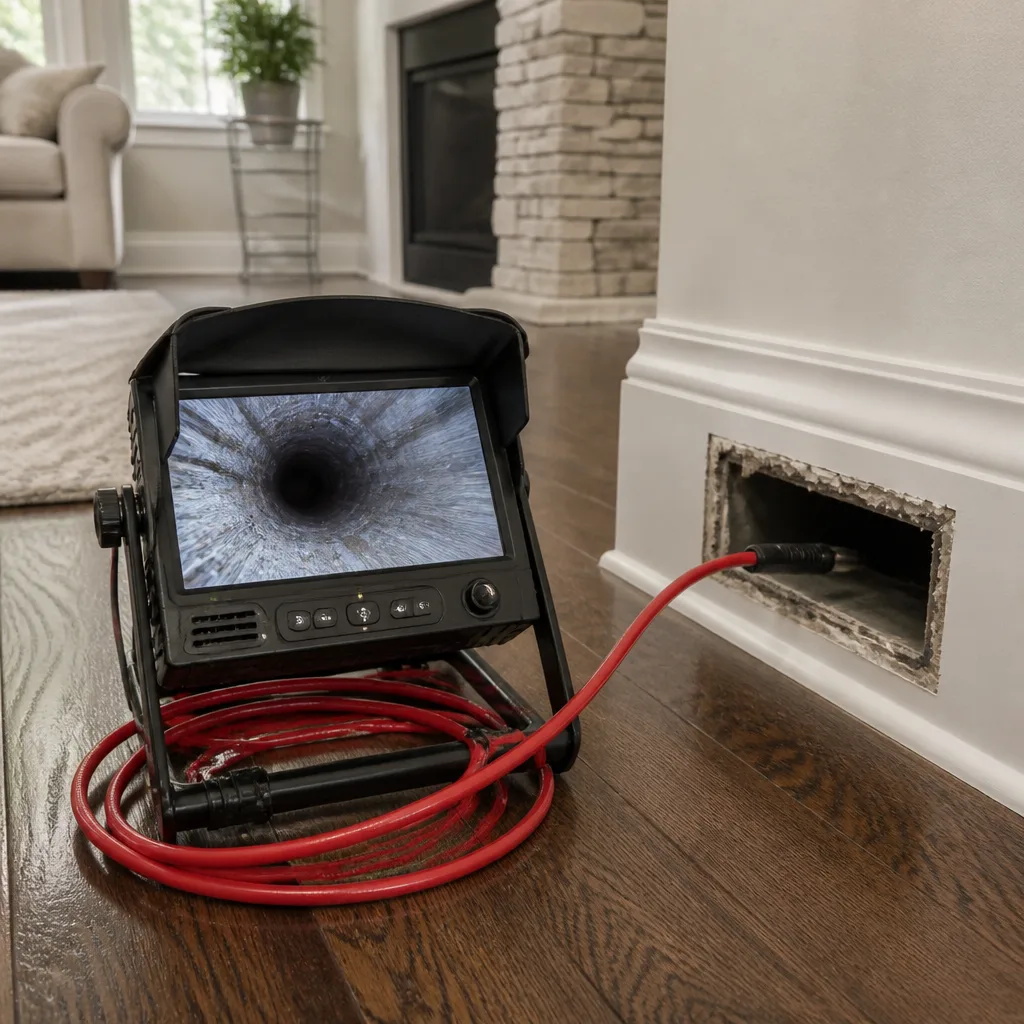 Camera inspection
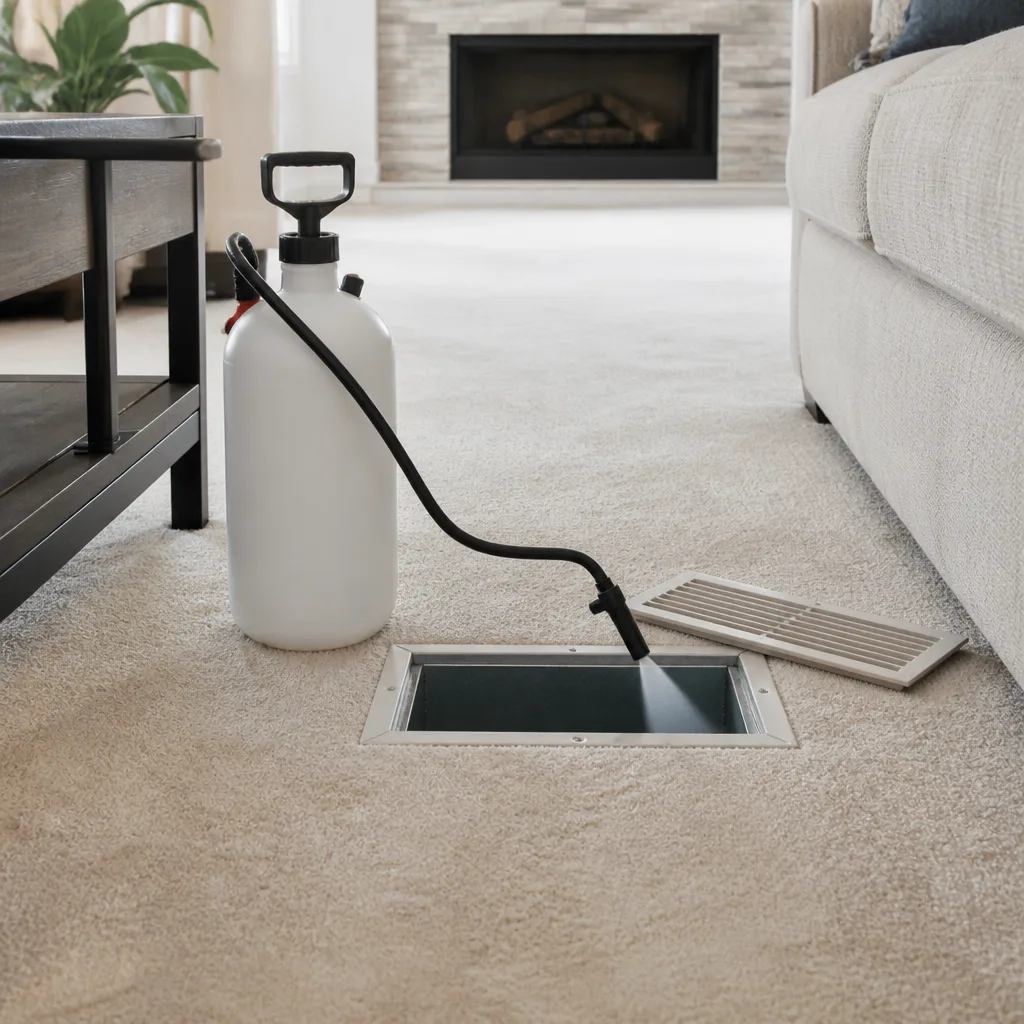 Sanitizing & deodorizing
Whole-system duct and dryer vent check with before-and-after photos - you see exactly what came out of your vents
That "$99 whole-house special" is a bait ad - the real number appears once they are in your hallway, or the "clean" is a shop-vac at the register. We photograph the inside of your ducts before and after instead.
Seasonal Air Duct Cleaning Care for Herriman: Year-Round Homeowner’s Guide
Most air duct cleaning advice you’ll find online tells you to schedule a cleaning in early fall, right before the furnace kicks on. That advice was written for the Midwest, where the worst dust of the year is leaf-and-field debris. Herriman doesn’t work that way. Spring is when regional grading and construction churn the most particulate into the air here, so a homeowner who waits until October to clean is carrying five months of high-load debris into the heating season. This guide walks through each of Herriman’s four seasons, explains the specific mechanism fouling your ducts in each one, and gives you a 12-month care calendar built around this valley’s actual environmental rhythm rather than a national template.
Quick Answer
In Herriman, the best time to clean air ducts is late winter or early spring, not fall. Spring grading and construction drive the year’s highest particulate loads, so cleaning in March or April means your system starts the high-infiltration season clean rather than starting the heating season with debris already accumulated. A single annual professional cleaning, timed for early spring, paired with the right filter upgrades and a fall switchover inspection, covers all four seasonal mechanisms.
Styles & brands we work with
- Whole-home duct cleaning
- Dryer vent cleaning
- Camera inspection
- Sanitizing & deodorizing
Table of Contents
- Spring in Herriman: The Highest-Infiltration Season
- Summer: How Wildfire Smoke Bypasses Your Filter
- Fall: The HVAC Switchover Inspection
- Winter: Inversions and Recirculated Indoor Air
- Building Your 12-Month Duct Care Calendar
- What Professional Equipment Actually Changes
- Common Mistakes to Avoid
- When to Call a Professional
Spring in Herriman (March – May): The Highest-Infiltration Season
Spring is when Herriman’s ductwork takes its heaviest beating. The valley’s expansion brings grading, excavation, and new construction across the foothills and surrounding tracts, and that activity throws fine mineral dust into the air for weeks at a time. Wind events carry it. It settles on windowsills, accumulates on return grilles, and gets pulled into your HVAC system every time the fan runs. Homes near active build sites or recent dirt work see the worst of it, but the load reaches most of Herriman’s neighborhoods to some degree.
This is the season that breaks the standard advice. A homeowner following a fall-cleaning habit is essentially asking the system to spend summer and fall collecting everything spring and early summer threw at it, then clean up right as heating season begins. By that point the ducts have already carried months of heavy particulate, and the “pre-winter” clean only resets the clock right as the next load arrives.
Why spring cleaning beats fall cleaning in Herriman
- Peak particulate load arrives in spring. Grading and construction dust peak between March and May, well before heating season.
- Cleaning in spring resets the system before the load. You remove accumulated debris, then spend the worst months with clean ductwork.
- Fall cleaning leaves you exposed. A fall schedule means summer dust and smoke are still in the ducts when the furnace starts circulating air.
- Spring cleaning lines up with filter upgrades. You can bump filter rating before the load hits, not after.
Filter upgrades for spring
You don’t need to change your furnace filter monthly during grading season, but you do need to check it more often than the manufacturer’s general interval suggests. If you can see visible dust loading after three weeks, it’s time to swap. Moving to a higher-rated pleated filter before the construction dust hits is worth considering, but check with your HVAC technician first: systems are rated for a certain pressure drop, and an overly restrictive filter strains the blower. A HVAC cleaning after the peak spring load clears the coil and cabinet, which is where most of the fine dust settles.
Summer in Herriman (June – August): How Wildfire Smoke Bypasses Your Filter
Summer brings the second mechanism: wildfire smoke. The Wasatch Front sees smoke intrusions from regional fires through much of the summer, and the particle size matters. Smoke particles in the PM2.5 range are roughly 2.5 microns and smaller. Standard MERV 8 filters, and certainly the cheap fiberglass panels, don’t capture them efficiently. They travel through the return air stream, past the filter, and settle in the return plenum, the duct lining, and on the evaporator coil.
This is the mechanism most homeowners miss. They smell smoke in the house for a few days, close the windows, and assume the filter is handling it. It isn’t. The filter catches larger dust but lets most of the smoke particulate through. That material coats the inside of the return side of the system over the course of the season, and you don’t notice it until somebody looks inside the plenum or a professional runs a camera through the ductwork.
What to do during smoke season
- Run the system on recirculate or fan-on during smoke events so you’re not pulling outdoor air in through an open window or economizer.
- Upgrade to a filter rated for fine particulate if the system can handle the pressure drop. Consult an HVAC professional before moving up.
- Check the return grille monthly. Visible dark staining in summer is a sign of smoke loading.
- Plan a fall inspection. If the return plenum has collected smoke residue through July and August, it needs to be addressed before the heating season.
Why the return plenum is the prime deposit site
The return side of the system runs under negative pressure. Air gets sucked through every gap, joint, and loose seam in the return ductwork, and fine particulate drops out of the airstream where velocity is lowest – which is typically inside the plenum and in the sections of duct immediately downstream of the filter. That’s the reason a professional inspection checks the return side first, and it’s why air duct cleaning focused only on the supply side misses the summer load entirely.
Fall in Herriman (September – November): The HVAC Switchover Inspection
When the furnace comes on for the first time each fall, many Herriman homeowners notice a smell. Sometimes it’s a light dust odor, sometimes it’s a stronger, burnt-dust smell that lingers for a few days. That smell is debris accumulated in the cooling-mode ductwork and on the heat exchanger during the summer, being burned off as the first heating cycle runs. It’s not dangerous on its own, but it’s a useful signal: the system has been sitting in cooling mode for months, and the first heat cycle is cooking off whatever collected in the interim.
Fall is the right time for an HVAC switchover inspection, and it’s a natural moment to schedule a professional check if you didn’t do a spring cleaning. The inspection covers:
- Heat exchanger condition. Cracks or blockages are a safety issue, not a cleaning chore. A trained technician should inspect this – don’t attempt it yourself.
- Return plenum and filter cabinet. Check for summer smoke residue and dust loading.
- Evaporator coil. Coil fins collect fine dust through the cooling season; a dirty coil reduces efficiency.
- Duct seams and joints. Loose connections pull unfiltered air into the system and should be sealed.
- Blower wheel and motor. Debris on the blower wheel throws the assembly out of balance and reduces airflow.
If you notice persistent odor after the first few heat cycles, or if the smell is accompanied by a decrease in airflow, get a professional inspection. Our technicians use a Rotobrush system and a Nikro vacuum setup on every cleaning job, and can inspect the whole system in a single visit rather than asking you to schedule a separate contractor.
Leaves, pollen, and fall pollen loads
Fall also brings its own particulate load – mainly outdoor pollen and leaf debris drawn into the outdoor unit and, from there, into the return air stream when the system is running. Fall is not the highest seasonal load in Herriman, but it’s the season when accumulated summer load and incoming fall load add together. A fall inspection catches both.
Winter in Herriman (December – February): Inversions and Recirculated Indoor Air
Winter inversion layers settle over the Wasatch Front during many of the colder weeks, trapping cold air and fine particulate beneath a warm cap. Homes in Herriman run the heating system through most of the day, and the indoor air recirculates through the same ductwork hour after hour. There’s no outdoor air exchange worth mentioning unless a window gets cracked. That recirculation is the winter mechanism: fine particulate from cooking, cleaning, and whatever leaked in through the return side during summer gets concentrated in the duct lining materials.
Winter is not a season to clean ductwork in most homes if the spring cycle is on track. It’s a season to protect what’s there. The right moves:
- Change the filter on the manufacturer’s interval, and check it monthly. Winter loads are lighter for large outdoor particulate but heavy for indoor fine dust.
- Consider a whole-home air filtration unit if you have allergy sufferers, young children, or anyone with respiratory sensitivities in the home. A Honeywell or Aprilaire system integrates with the existing HVAC system and provides continuous filtration during the extended heating runs.
- Don’t schedule a cleaning just to “freshen” the ducts unless a professional inspection identifies a real problem. Winter cleaning is fine, but it doesn’t beat the spring cycle for effect.
Why duct lining materials are the concern in winter
Fiberglass-lined duct board and flexible duct – common in Herriman homes, especially in retrofits and additions – have a porous interior surface. Fine particulate deposits into the lining material, not just on top of it. Over months of concentrated recirculation, that load becomes hard to dislodge with anything short of professional cleaning equipment. This is where Abatement Technologies-grade filtration and containment matter during a cleaning job: the porous lining is exactly the material that needs proper negative-pressure containment so dust doesn’t migrate into the living space during cleaning.
Building Your 12-Month Duct Care Calendar
The right care calendar is sequenced by mechanism, not by month. Here’s the version we recommend for Herriman homes:
| Season | Primary Duct Fouling Mechanism | Recommended Action |
|---|---|---|
| Spring (Mar – May) | Construction and grading dust (PM10) | Schedule professional cleaning; upgrade filter before the load |
| Summer (Jun – Aug) | Wildfire smoke (PM2.5) bypassing filter | Run recirculate; monitor return plenum; plan fall inspection |
| Fall (Sep – Nov) | HVAC switchover odor and residual summer load | Switchover inspection; contactor and coil check; seal loose seams |
| Winter (Dec – Feb) | Inversion-driven indoor recirculation concentration | Filter discipline; consider whole-home filtration |
The calendar, month by month
- February. Check the filter and order replacements. Call to schedule a March or April cleaning before the spring rush. Dryer vent cleaning fits neatly into the same visit.
- March – April. Professional duct cleaning. Upgrade to a higher-rated filter if your HVAC system can handle it.
- May. Check the filter every three weeks through the peak dust window.
- June – August. Watch for smoke intrusion; run the system on recirculate during events. Check return grille monthly.
- September – October. Schedule the HVAC switchover inspection. Have the coil and blower wheel looked at if you didn’t get to a spring cleaning.
- November – January. Filter discipline. Consider a Honeywell or Aprilaire whole-home unit if allergy symptoms persist.
Homeowners who renovate or move during the year should add an unscheduled clean to this calendar. Renovation dust, drywall particulate, and construction debris are a separate mechanism from the seasonal ones and warrant a cleaning on their own schedule, not the calendar above.
What Professional Equipment Actually Changes
The difference between a good duct cleaning and a poor one is mostly equipment and containment. Consumer shop vacuums and entry-level tools don’t create enough negative pressure or agitation to dislodge sediment from duct lining. What matters:
- Rotobrush and Nikro systems provide the rotational agitation and high-volume extraction that get into every branch of the system, not just the runs accessible from one register.
- Abatement Technologies air filtration and containment tools keep dust from migrating into the living space during cleaning – a commercial remediation standard rarely applied to residential duct cleaning.
- Guardsman-grade sanitizing treatments apply surface protection as the finishing step after cleaning, so the system doesn’t immediately re-foul.
- Honeywell and Aprilaire familiarity lets us recommend and integrate whole-home filtration in the same appointment as the cleaning.
Every job uses commercial-grade equipment brought to your home, not consumer tools. Our technicians have up to 9 years of experience, and we save before-and-after photos of your own system so you can see the difference before we leave. For a full picture of the equipment standard and process, our Herriman Air Duct Cleaning Pros page covers the full service scope.
Common Mistakes to Avoid
- Cleaning in October and calling it annual care. Fall cleaning ignores the spring mechanism that drives Herriman’s highest infiltration load.
- Assuming the furnace filter is catching wildfire smoke. Standard filters are not rated for PM2.5, and smoke particulate deposits in the return plenum regardless.
- Skipping the fall switchover inspection. The first heating cycle burns off accumulated dust and debris, but a full inspection catches problems that a few days of odor don’t reveal.
- Running cheap fiberglass filters to “maximize airflow.” They capture almost nothing in the fine particulate range.
- Forgetting the dryer vent during the spring cleaning. Dryer vents clog year-round and are a separate fire hazard from duct cleanliness; schedule the dryer vent cleaning alongside the duct cleaning.
- Ignoring renovation dust. Any drywall, flooring, or roof work dumps a load of debris that should be cleaned before the next heating season.
- Trusting a cleaning you can’t verify. Insist on photos of the actual work and a clear look at what was pulled from the system.
When to Call a Professional
Call a professional if you’ve noticed any of these signs: visible dust accumulating on return grilles faster than usual, a persistent musty odor when the system runs, a burnt-dust smell that doesn’t clear after a few heat cycles, visible dark staining near the return plenum, a recent renovation, a recent move into a Herriman home with unknown duct history, or a household member with allergies or asthma that seems to worsen when the HVAC runs. These are the situations where professional assessment is worth the call. Herriman Air Duct Cleaning Pros offers free estimates in Herriman, and we use commercial-grade equipment on every job. Call (844) 443-4862 for a free estimate.
See the difference
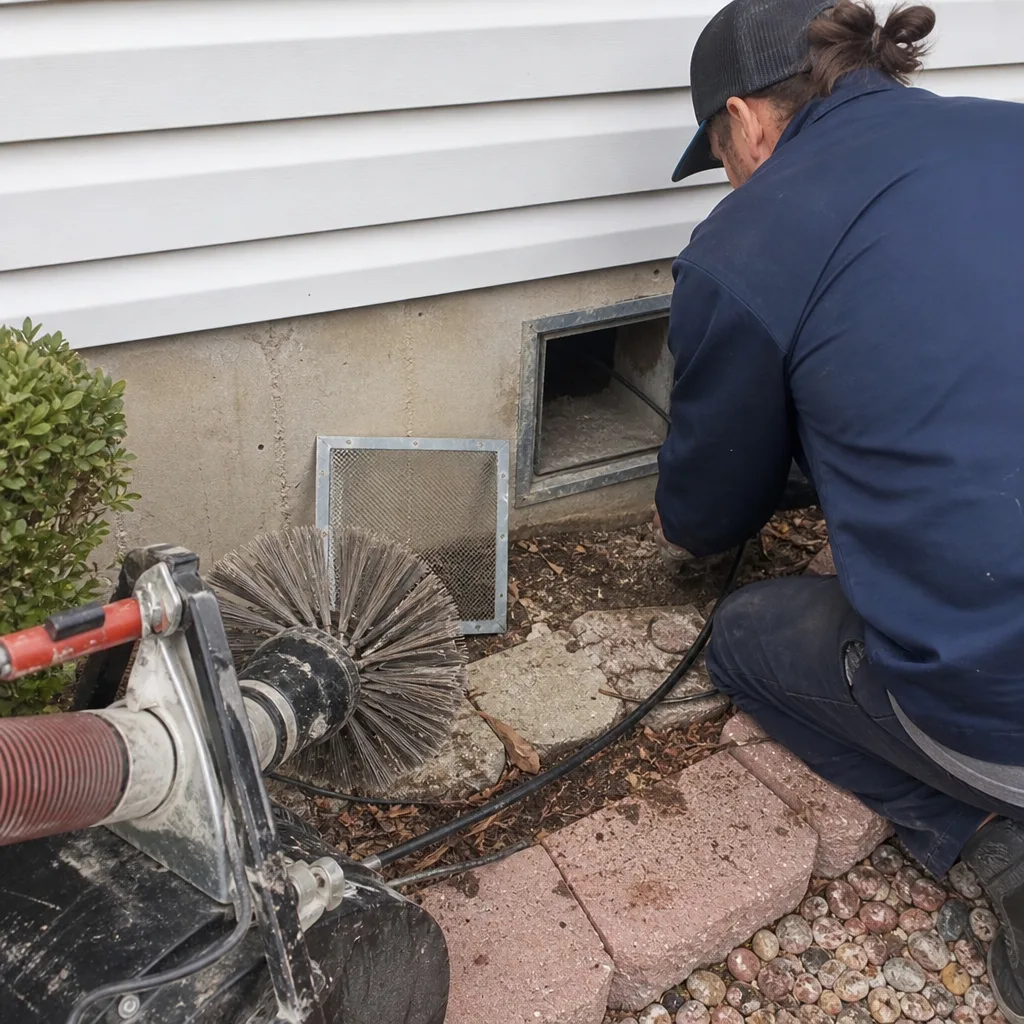 Before
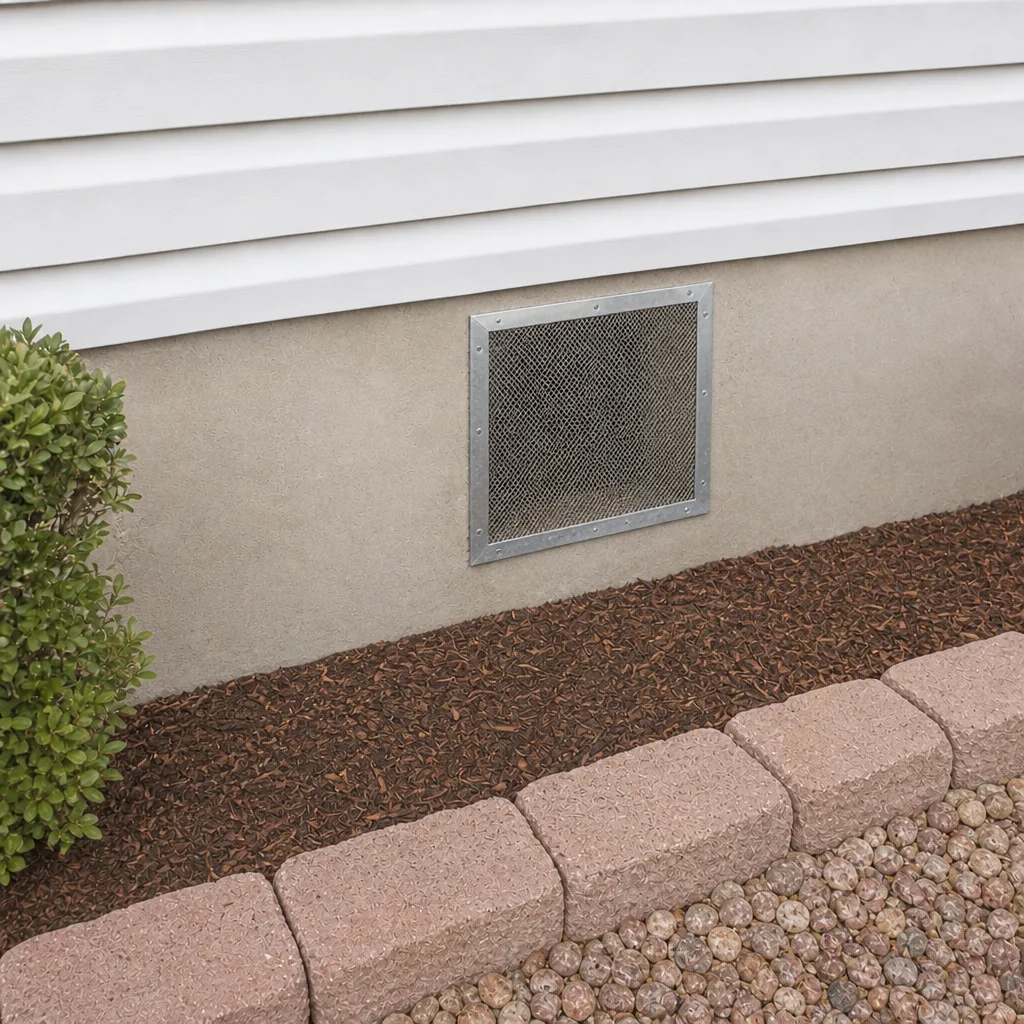 After
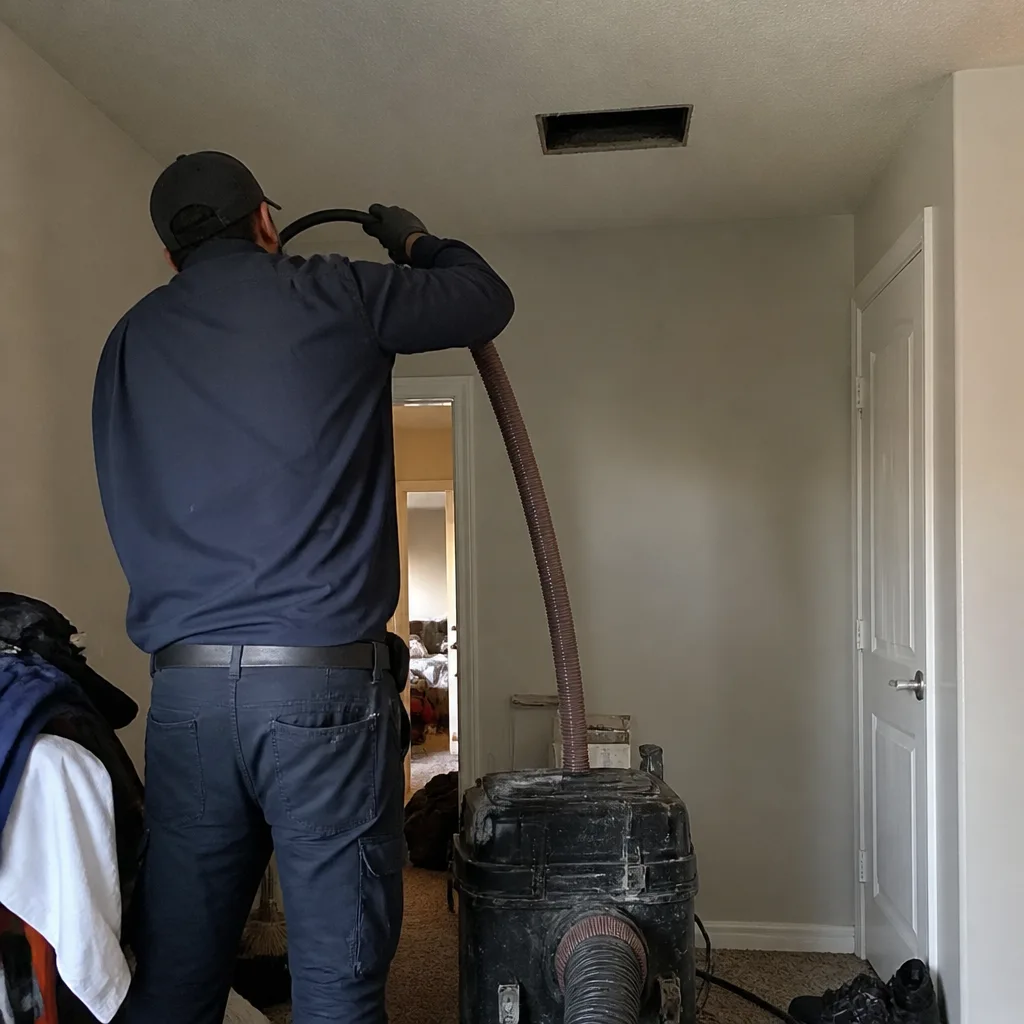 Before
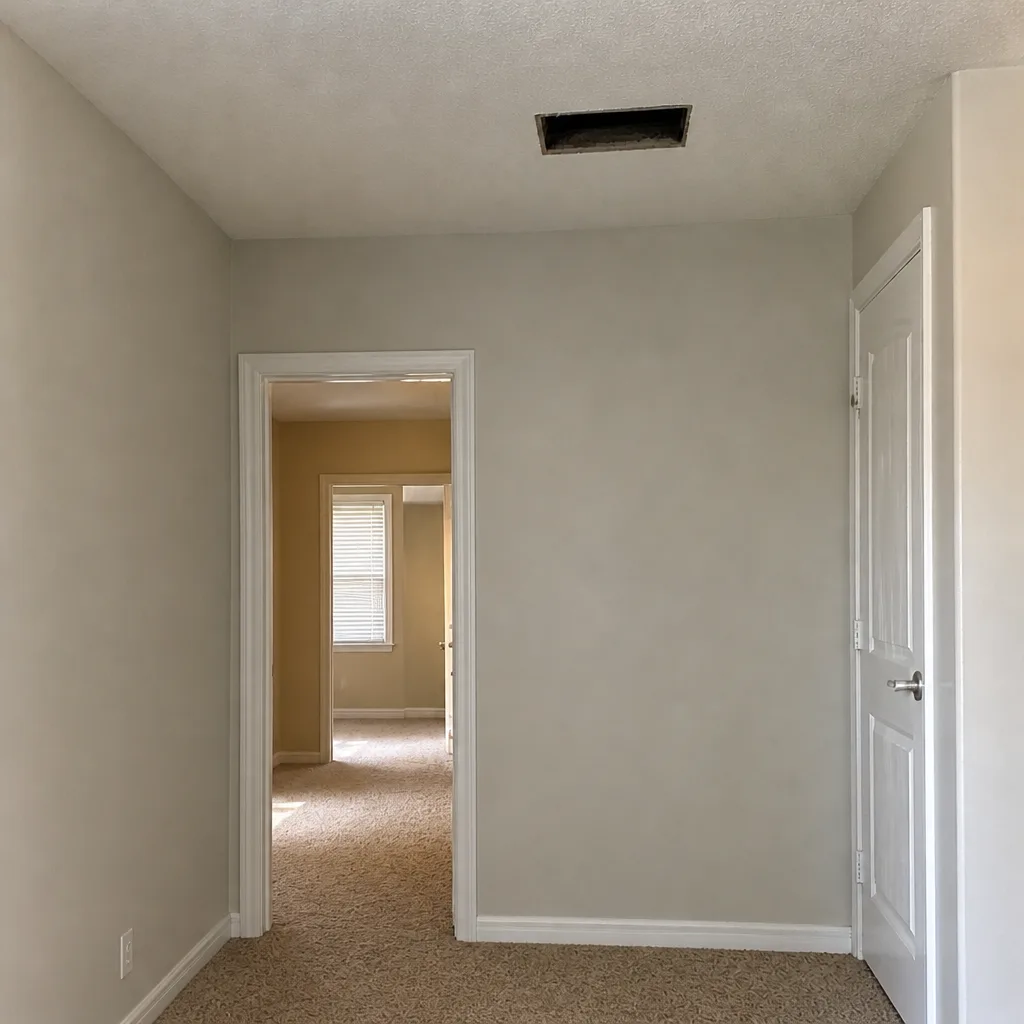 After
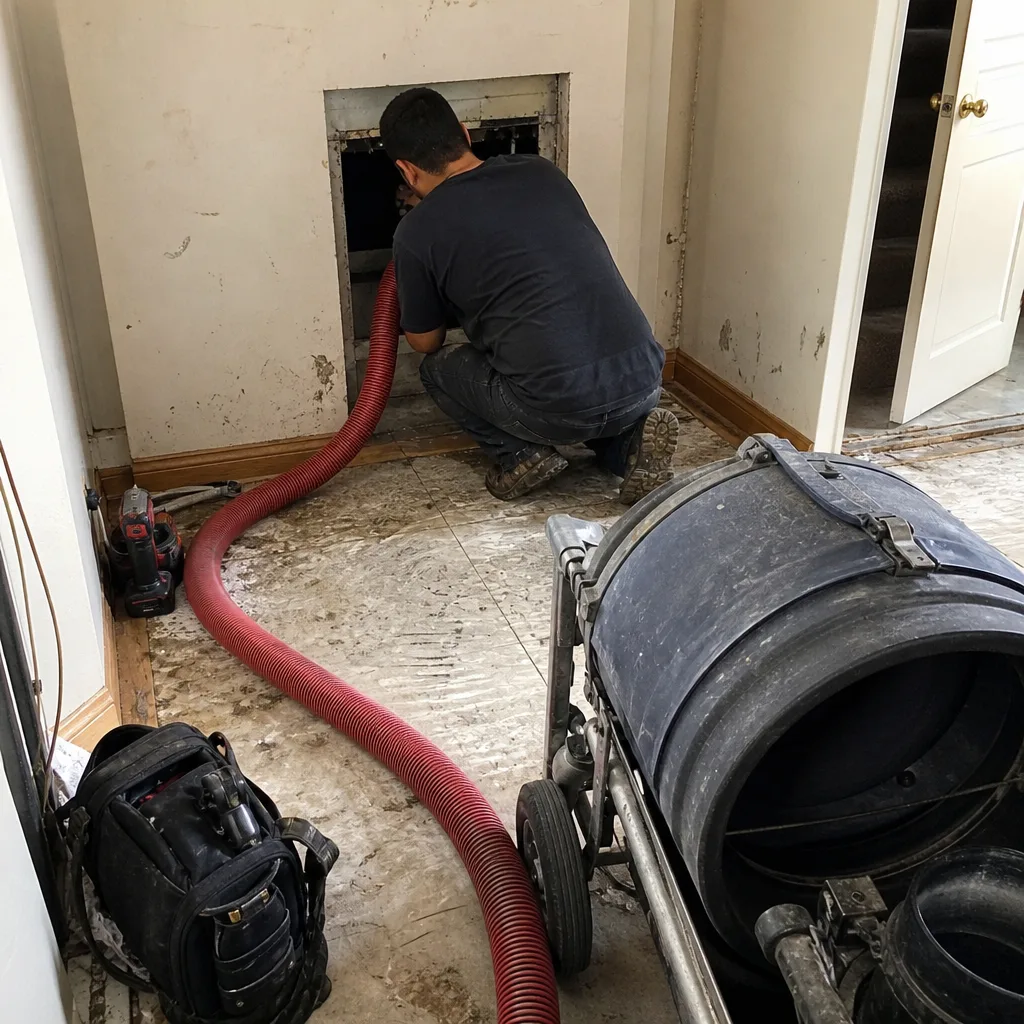 Before
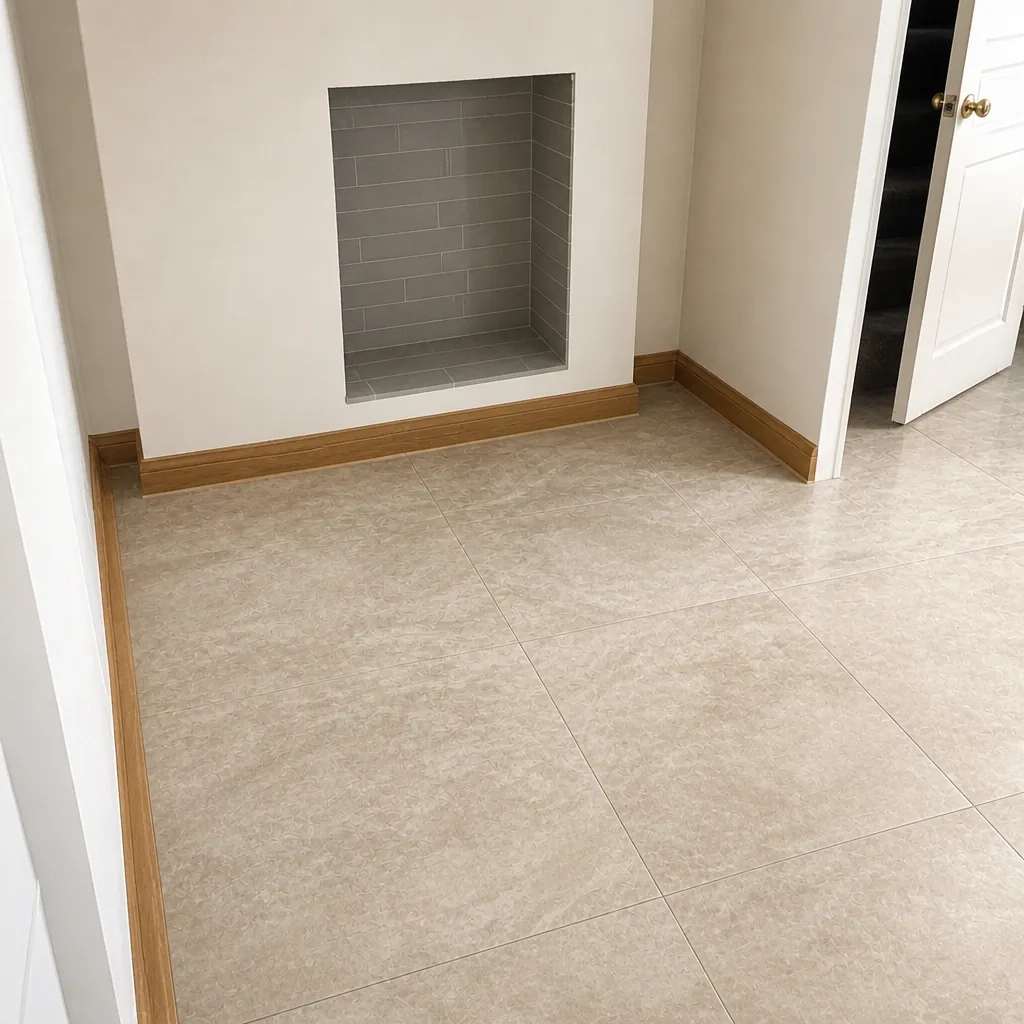 After
Frequently Asked Questions
Once a year is right for most Herriman homes, timed for late winter or early spring. Homes with pets, allergy sufferers, recent renovations, or proximity to active construction sites may benefit from a second cleaning in the fall.
Because spring grading and construction dust drives Herriman’s highest annual particulate load. Cleaning in spring resets the system before the load, while cleaning in fall means the ducts collect spring and summer debris before the cleaning. For the full local picture, see our air duct cleaning guide.
Not effectively. Standard MERV 8 or lower filters don’t capture fine PM2.5 with high efficiency, and wildfire smoke is largely in that range. A professional-grade whole-home filter or higher-rated pleated filter that your HVAC system is rated for will help, but the smoke particulate that bypasses the filter settles in the return plenum and duct lining regardless, which is why a fall inspection matters.
It’s accumulated dust and debris in the cooling-mode ductwork and on the heat exchanger being burned off during the first heat cycle. It’s generally harmless and clears after a few cycles, but a persistent smell or reduced airflow is worth a professional inspection.
Usually no. Winter is a season to protect what’s there through filter discipline and, if symptoms warrant, a whole-home Honeywell or Aprilaire filtration unit. Winter cleaning is fine when a professional inspection finds a real problem, but it doesn’t beat the spring cycle for typical homes.
We price per system, by written estimate, after inspecting the home. There’s no per-vent price and no coupon bait. Call (844) 443-4862 for a free estimate. Estimates are free, and the written estimate sets the final price before any work starts.
The Bottom Line
Herriman’s seasons each drive a distinct mechanism into your ducts: spring grading dust, summer smoke particulate, fall switchover debris, and winter inversion recirculation. The annual cleaning most homeowners schedule in fall covers one of the four, and it’s not the biggest one. Build your calendar around the actual environmental rhythm: clean in Late winter or early spring, inspect at the fall switchover, keep the filter discipline through summer smoke and winter inversions, and consider a whole-home filtration upgrade if allergy symptoms persist. If you’re ready to schedule, call (844) 443-4862. We answer 24/7. Fast dispatch from 7am to 7pm, Sunday through Friday, closed Saturday. Written by the team at Herriman Air Duct Cleaning Pros.
Written by the team at Herriman Air Duct Cleaning Pros.