
Last updated November 23, 2026
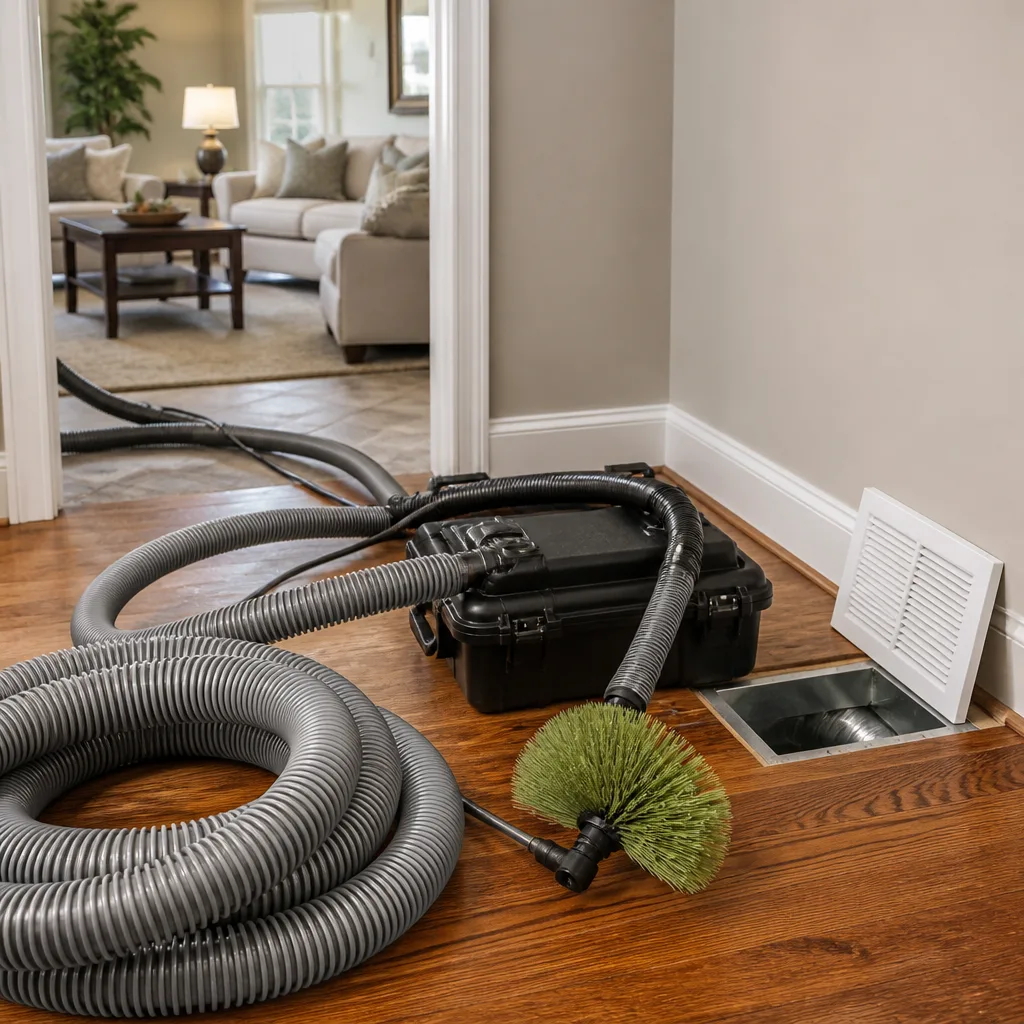 Whole-home duct cleaning
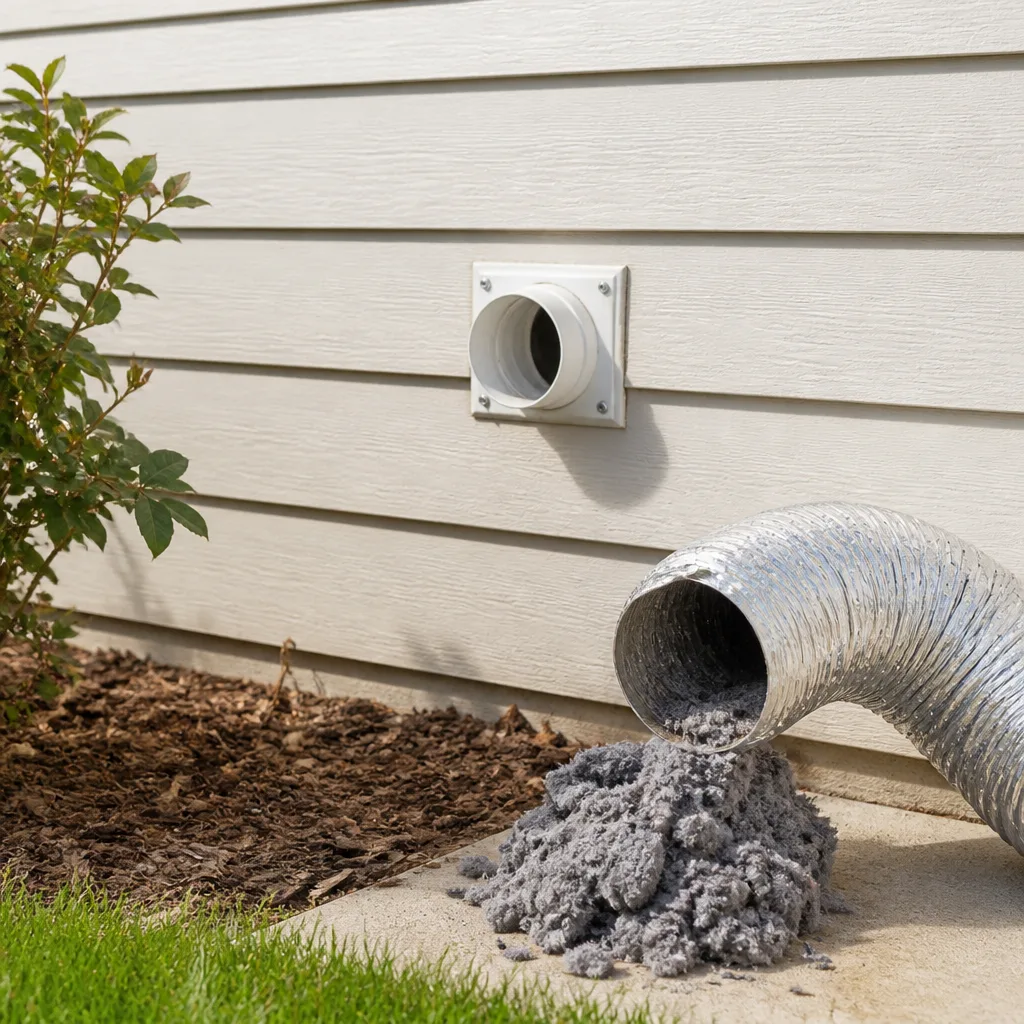 Dryer vent cleaning
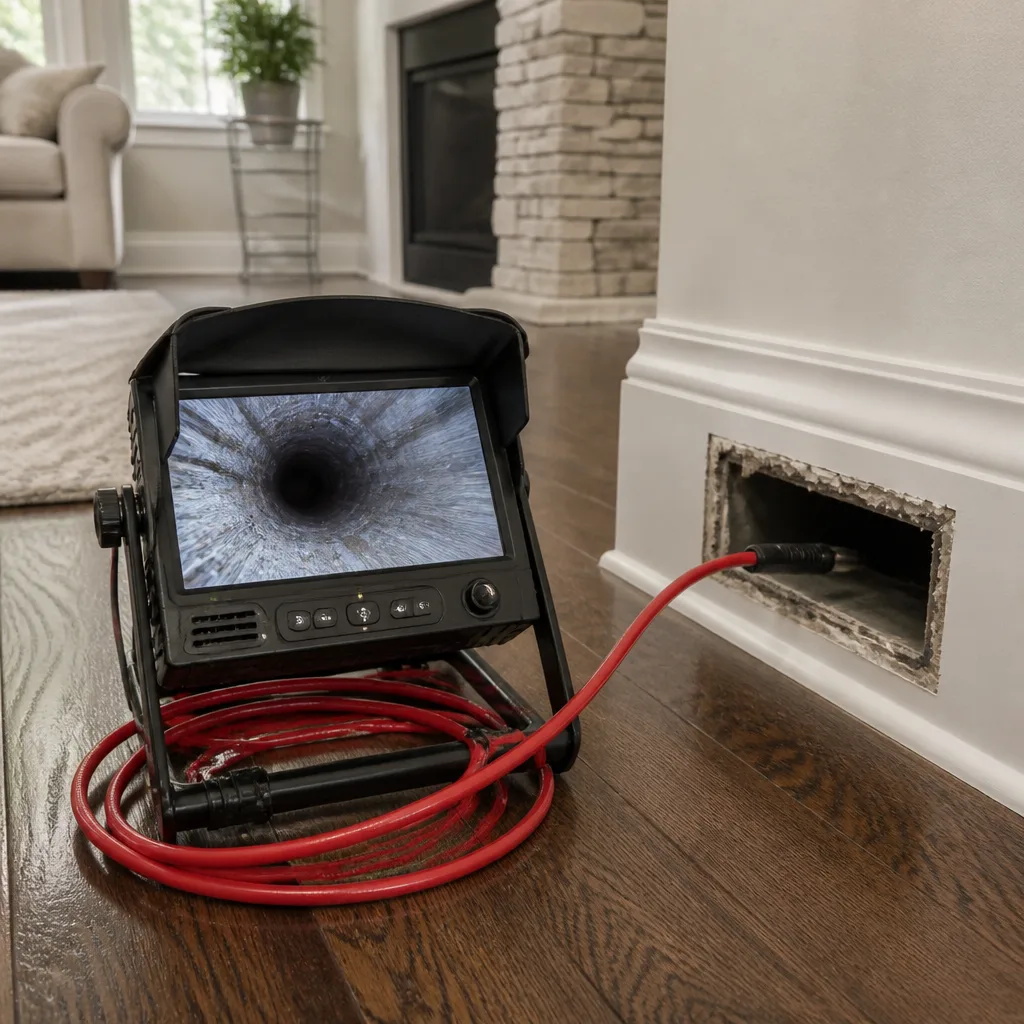 Camera inspection
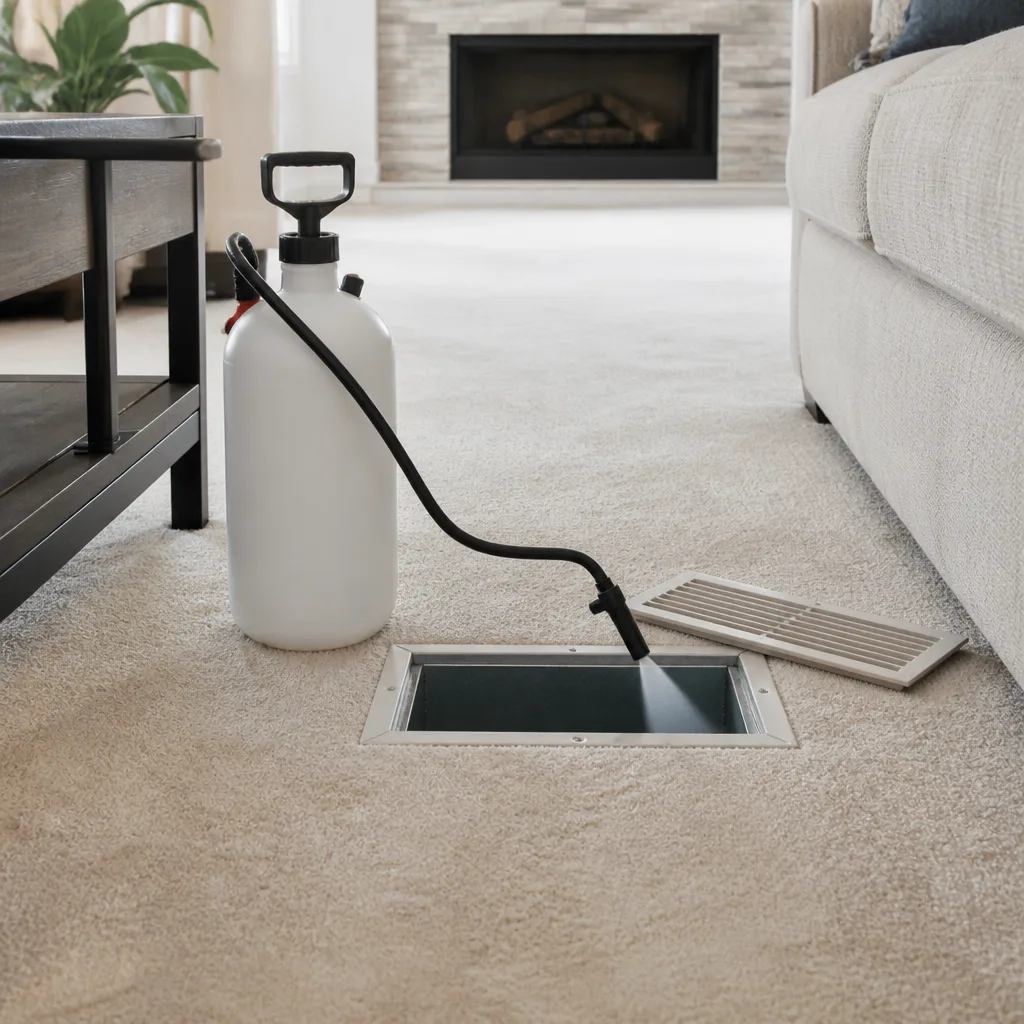 Sanitizing & deodorizing
Whole-system duct and dryer vent check with before-and-after photos - you see exactly what came out of your vents
That "$99 whole-house special" is a bait ad - the real number appears once they are in your hallway, or the "clean" is a shop-vac at the register. We photograph the inside of your ducts before and after instead.
DIY vs Professional Air Duct Cleaning: The Herriman Homeowner’s Decision Guide
Here’s the part most duct cleaning advice gets wrong: the 12 inches of supply register a homeowner can reach with a shop vac are the cleanest part of the whole system. Think about the airflow. Filtered air pushes out of the blower, through the supply trunk, and out that register under positive pressure. Dust doesn’t settle against the current. It settles where the air slows down and turns: the return plenum, the main trunks, the air handler box. That’s the exact territory a homeowner can’t reach. This guide maps what’s realistically DIY in a Herriman home, what isn’t, and how to decide before you spend money on either path.
Quick Answer
DIY duct cleaning handles maintenance on the parts you can reach: registers, grilles, accessible dryer vent runs, and the filter housing. Professional cleaning is what actually reaches the main trunks, return plenum, and air handler where contamination accumulates. For a Herriman home with visible dust, musty odors, recent renovations, or allergy symptoms indoors, DIY closes maybe 15 percent of the job; professional equipment with negative pressure containment does the rest. If you only need register dusting and filter maintenance, DIY is fine. If the complaint is the air itself, it isn’t.
Styles & brands we work with
- Whole-home duct cleaning
- Dryer vent cleaning
- Camera inspection
- Sanitizing & deodorizing
Table of Contents
- The Anatomy of an HVAC Duct System: What You Can Reach and What You Can’t
- What Consumer Duct Cleaning Kits Actually Accomplish
- Three Scenarios Where DIY Maintenance Genuinely Works
- Three Scenarios Where DIY Makes Professional Cleaning Harder
- The Honest Cost Comparison for a Herriman Homeowner
- How to Tell a Real Professional Cleaning From a Marketing Visit
- Dryer Vents: The One DIY Project With Real Safety Stakes
- Herriman-Specific Factors That Change the Equation
The Anatomy of an HVAC Duct System: What You Can Reach and What You Can’t
Most HVAC systems in Herriman homes follow the same basic layout, and understanding it is the whole game. The air handler moves air. A return duct pulls room air back in through a filter and return grilles. The blower pushes conditioned air into a supply trunk, which branches into smaller runs that end at supply registers in each room. Every component in that chain influences what ends up in your lungs.
Here’s the reachability problem, component by component:
- Supply registers and grilles: fully accessible. Remove two screws and you’re in. But as we described above, this is the least contaminated stretch of the system because filtered, pressurized air flows through it continuously.
- Branch ducts (the short runs to each room): partially accessible for a foot or two from the register opening, depending on how the duct is routed through the ceiling or floor structure. Rarely the contaminated section.
- Main supply trunk: sealed behind drywall, framing, or rigid ductwork in most homes. A consumer vacuum cannot generate enough airflow to reach it, and there’s no access point to insert a brush.
- Return trunk and return plenum: the highest-contamination zone in nearly every home. Return air is unfiltered room air moving at lower velocity, so debris settles here. Most of these runs have no accessible opening at all.
- Air handler box and blower compartment: requires panel removal, and working inside it is not a homeowner task. The blower wheel and evaporator coil sit here, and wet debris near a coil becomes a microbial problem, not just a dust problem.
In Herriman homes, particularly newer builds where ductwork was sealed into tight mechanical chases during construction, the accessible percentage drops further. We’ve mapped enough local systems to say it plainly: the sections a homeowner can touch and the sections that need cleaning are almost never the same sections.
That’s the structural argument. Consumer tools don’t fail because they’re weak. They fail because they can’t reach the load-bearing parts of the system.
What Consumer Duct Cleaning Kits Actually Accomplish
Consumer duct cleaning kits fall into two groups: rotary brush attachments that fit a drill or a shop vac hose, and elastic nozzle attachments that use compressed air or the vacuum’s own suction. Both work, in a narrow sense, on the surfaces they contact. Neither meets the industry standard for what “cleaning” actually means.
The NADCA ACR standard (Assessment, Cleaning, and Restoration) defines source removal as the goal: physically removing contaminants from the system’s surfaces, not knocking them loose to resettle elsewhere. It requires negative pressure containment (the duct system is put under vacuum during cleaning so disturbed debris is captured, not dispersed), mechanical agitation across the full interior surface, and post-cleaning verification.
A shop vac does not create negative pressure across a duct system. It creates suction at a 2-inch nozzle. A rotary brush attachment reaches 4 to 6 feet into a branch run if the geometry allows. It cannot agitate the interior of a main trunk that’s 12 feet long and 8 inches square.
What’s the practical effect? Consumer kits are good at wiping dust from the surface they touch. Professional duct cleaning removes the settled matter from the sections that regenerate dust into the airstream. These are different jobs, and no amount of consumer effort converts one into the other, because the limitation is the equipment’s reach and airflow capacity, not the homeowner’s diligence.
Our crews use Rotobrush and Nikro systems that generate enough agitation and airflow to clean the full interior of a trunk line, paired with Abatement Technologies filtration equipment to hold disturbed debris under containment. These aren’t premium add-ons. They’re the entry requirement for source removal at residential scale. You can’t rent an equivalent system from a home improvement store, which is the honest reason the comparison exists.
Three Scenarios Where DIY Maintenance Genuinely Works
We’re not going to tell you that touching your ducts is forbidden. Some parts of indoor air quality maintenance belong in a homeowner’s hands, and doing them yourself keeps the professional visit focused on the sections that matter.
1. Register and Grille Cleaning
Removing supply and return grilles and washing them in a sink or with a hose is a legitimate DIY task. Dust accumulates on the fins and louver faces, and a soft brush with mild soap removes it without risk. Do this once or twice a year, more often during a Herriman spring when pollen loads climb and windows are open. Dry the grilles fully before reinstalling.
2. The Vacuum-Accessible Section of the Dryer Vent
The first few feet of a dryer vent run, from the dryer connection to the first elbow or the exterior wall, is often reachable with a flexible brush kit and a shop vac. Cleaning that section prevents lint from building up at the most common point of accumulation. Beyond the first elbow, or if the run is longer than 10 to 15 feet or has multiple turns, stop. We’ll explain why in the dryer vent section below.
3. Filter Housing and Return Grille Wipe-Downs
The filter slot and the interior face of the return grille collect dust that the filter doesn’t capture at the edges. A vacuum with a brush attachment and a damp cloth handle this safely. Wipe the housing, vacuum the grille face, and replace the filter on the manufacturer’s schedule. This is preventative maintenance that actually works, and it costs almost nothing.
Note what these three tasks have in common: they’re all done from the room-facing side of the system, with no tools inside the sealed ductwork, and none of them disturb settled contamination. That’s the boundary.
Three Scenarios Where DIY Makes Professional Cleaning Harder
This is where the decision gets more expensive. In specific cases, a homeowner’s attempt to clean the system actively degrades the result of the next professional visit, and increases the scope of what has to be done.
1. Pushing Debris Deeper Into the Trunks
A rotary brush fed into a supply register from the room side pushes in a direction that feels productive. But the airflow in the supply system runs the other way. A brush driven 4 feet into a branch can shove dislodged dust past the branch-trunk junction and into the main trunk, where it settles into a section that now requires professional access to reach and clean out. What would have been a routine job becomes a recovery job. The deeper the brush goes, the more debris gets concentrated in unreachable zones.
2. Dislodging Duct Joints and Liner Seams
Flexible ductwork and sealed joints are not built to withstand a spinning drill brush driven aggressively against a bend. In Herriman homes with flex duct runs through ceiling cavities, we’ve seen seams pulled apart and liner edges lifted by DIY brushes. A separated joint becomes a leak: conditioned air escapes into the wall cavity, unfiltered attic or crawlspace air gets pulled in, and the professional visit now includes duct sealing work. What started as a maintenance attempt turns into HVAC cleaning plus repair, because the joint problem was created by the brush, not found by it.
3. Spreading Contamination Without Containment
The third scenario is the one we take most seriously. If a duct system contains mold spores, rodent debris, or heavy construction dust from a recent renovation, agitating it without negative pressure containment disperses those contaminants into the living space. A brush and a shop vac don’t contain; they disturb. We’ve seen indoor air quality complaints escalate immediately after a DIY attempt in a home that was already on the edge of a microbial problem. Once spores are distributed through the supply runs, the remediation scope grows.
If you suspect any of these three conditions, stop the DIY and have the system assessed. Professional cleaning with containment is the safer path, and our air duct cleaning service is built around that standard.
The Honest Cost Comparison for a Herriman Homeowner
Most DIY-versus-professional comparisons cheat the math by comparing what a homeowner spends on supplies to what a professional charges for a full visit, as if those were the same job. They aren’t. The honest comparison separates the two.**
DIY supplies for the three tasks above:
- Shop vac with a brush attachment: $60 to $120 if you don’t already own one
- Register cleaning supplies (soft brush, mild soap, cloths): $10 to $20
- Flexible dryer vent brush kit: $25 to $50
- Replacement filters over a year: $40 to $120 depending on filter rating
- Time: 2 to 4 hours per session, repeated across the year
Typical professional air duct cleaning for a single-family Herriman home:
- Full system cleaning (supply, return, trunks, air handler box): most homes fall in the mid-hundreds, with the exact number set in a written estimate after the technician sees the system layout, number of registers, and system condition
- Sanitizing as a finishing step: adds to the base cleaning price; brands like Guardsman-grade treatments are available
- Duct repair and sealing if access or condition requires it: quoted separately based on scope
Compare scope line by line:
- DIY covers: registers, first feet of dryer vent, filter housing, grille faces. Possibly 10-20 percent of the total contaminant load in a typical home.
- Professional covers: everything DIY covers plus supply trunks, return trunk, plenum, air handler box, and pressure-contained removal throughout. The remaining 80-90 percent.
So the fair question isn’t “which is cheaper.” DIY costs less because it cleans less. If your system is clean and you’re maintaining it, DIY dollars go far. If your system hasn’t been cleaned in years, or has visible debris, DIY dollars buy very little per hour spent.
How to Tell a Real Professional Cleaning From a Marketing Visit
If you’re considering a professional visit, the equipment tells you what the service actually is. Anyone can arrive with a shop vac and a long hose. That’s a marketing visit dressed as a cleaning.
Here’s what to ask before booking:
- What equipment will you use inside the system? A rotary brush system (Rotobrush is the standard residential name) plus a truck- or portable-mount negative pressure unit is the baseline. If the answer is “a big vacuum,” ask what size and whether it’s set up for containment.
- Do you set up negative pressure before you agitate? The duct system should be under vacuum before any brush touches the interior. If the answer is a shrug, the visit is not source removal.
- Will I see before-and-after photos? A professional cleaning produces visible evidence. Any crew that can’t show you photos of your own duct interiors isn’t documenting the work.
- Is the plenum and air handler box cleaned, or just the branch runs? The answer tells you whether you’re paying for the full job or the easy part.
- Is the sanitizing step separate, and what’s in the product? A Guardsman-grade or comparable product applied after cleaning extends surface protection. Fogging a dirty duct just locks in the debris.
- Will the estimate include duct sealing if joints are compromised? A trustworthy crew flags seal issues during the visit and quotes the repair separately rather than pricing a cleaning and leaving the leaks.
Our crews work with the full set of equipment named above, keep photos on file for every visit, and price the job as one flat number agreed before the work starts. See the difference before we leave is a commitment we can stand behind because the equipment supports the claim.
Dryer Vents: The One DIY Project With Real Safety Stakes
Dryer vent cleaning is where we most often see homeowners push past the safe boundary. The physics are simple: lint is highly combustible, the vent is the only path out, and a blocked vent means heat builds in the dryer cabinet. That’s a fire hazard, not a maintenance inconvenience.
The safe DIY boundary is the accessible section: dryer connection to the first elbow, cleaned with a flexible brush and a vacuum. Anything past that is territory that requires full-length access. Long runs (over 10 to 15 feet), runs with multiple 90-degree elbows, or runs routed up through wall cavities cannot be verified clean from the dryer end. A brush that reaches the length doesn’t guarantee the full interior was cleared; the brush can pack lint against the terminal hood or leave a plug at an elbow.
If you’ve cleaned the accessible section and air still moves slowly or the dryer still runs hot, the remaining problem is in the section you can’t see. Our dryer vent cleaning service is staffed for exactly that scenario. In Herriman, where many homes have exterior-wall vent terminations with flapper hoods that can jam or clot with lint, this is a routine call.
Herriman-Specific Factors That Change the Equation
Generic duct cleaning advice doesn’t account for local conditions. A few Herriman-specific factors matter for the DIY decision.
- New-build mechanical chases: Herriman has grown quickly, and homes built in the last decade or so often route ductwork through tight interior chases with limited access panels. This shrinks the DIY-reachable percentage and raises the value of professional access tools.
- Renovation dust: Drywall dust and construction debris settle into return plenums during remodeling. That dust is finer than ordinary household dust and doesn’t clean out of a trunk line with a shop vac. After a major renovation, a professional cleaning is the reasonable first step, not the last resort.
- High-desert dust cycling: Herriman’s dry climate and wind-driven dust load mean filter housings and return grilles collect visibly faster than in more humid regions. This makes the DIY maintenance tasks especially worth doing, and also means the return plenum sees heavier loading between professional cleanings.
- Seasonal pollen loads: Spring pollen and summer dust combine to push air quality complaints. A cleaning in late winter or early spring sets the system up for the season when indoor air quality most often becomes a real issue.
- Air quality upgrades: If you’re considering a filtration upgrade (media cabinets, higher-MERV filters, or systems like Honeywell and Aprilaire products), those work better on a clean system. Filter upgrades installed on a dirty duct just capture more of what the duct is shedding.
These factors don’t make Herriman unique in the country, but they do change the DIY-versus-professional math. A homeowner here gets less DIY value than someone in a milder climate with more open duct routing, and the professional visit carries more weight.
Common Mistakes to Avoid
- Cleaning the registers and calling the system clean. Registers are the visible part and the cleanest part. The problem sections are behind the walls and floor.
- Using a shop vac as if it were negative pressure equipment. A shop vac creates suction at the nozzle. Negative pressure containment holds the whole duct system under vacuum. These are not the same function.
- Driving a drill-mounted brush into a flex duct run. Aggressive brushes against a bend or seam can pull a joint loose and create a leak that wasn’t there before the attempt.
- Cleaning a dryer vent until you can’t see the brush past the first elbow. If you can’t see the full length of the vent, you don’t know if it’s clear. Long or multi-elbow runs need full-length cleaning and verification.
- Skipping the diagnostic step before booking any professional service. Get a written estimate based on the actual system layout before any work starts. A quote given before a technician has seen the system is a guess, not an estimate.
- Ignoring a musty odor until a microbial problem develops. Smell has a signal function. If your registers smell musty, the origin is usually wet debris near a coil or in a return line, and DIY efforts at the register face don’t touch it.
- Skipping the post-clean air quality step. Cleaning without optional sanitizing leaves the surface bare. A Guardsman-grade treatment applied after cleaning adds lasting protection, and skipping it costs another visit later.
See the difference
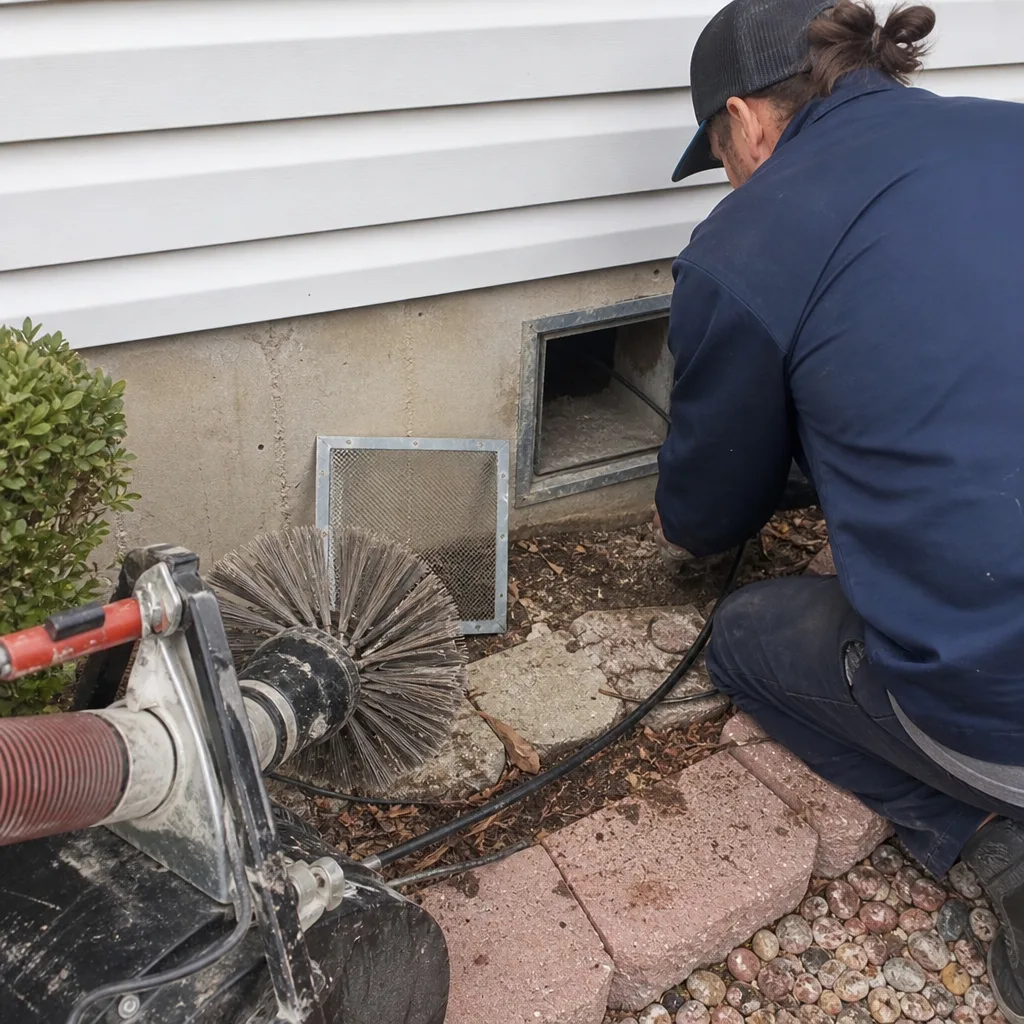 Before
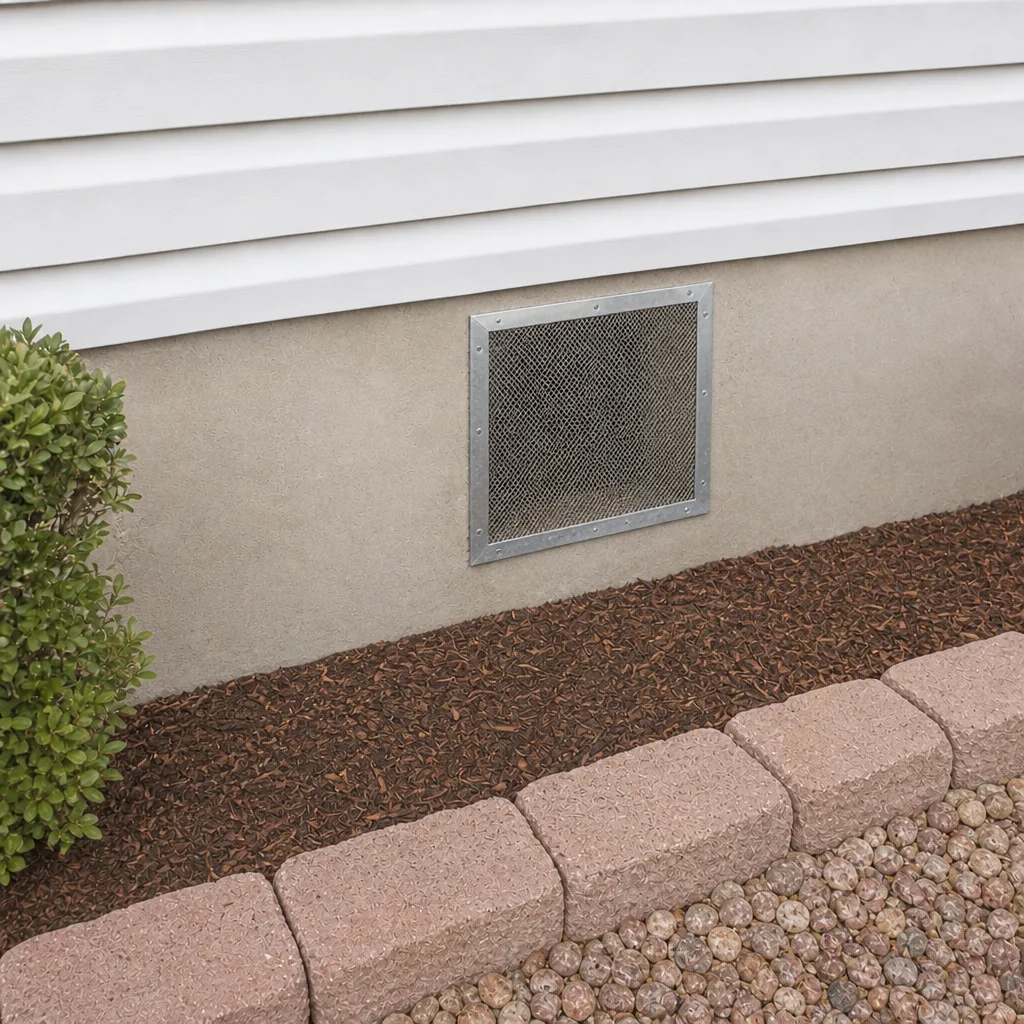 After
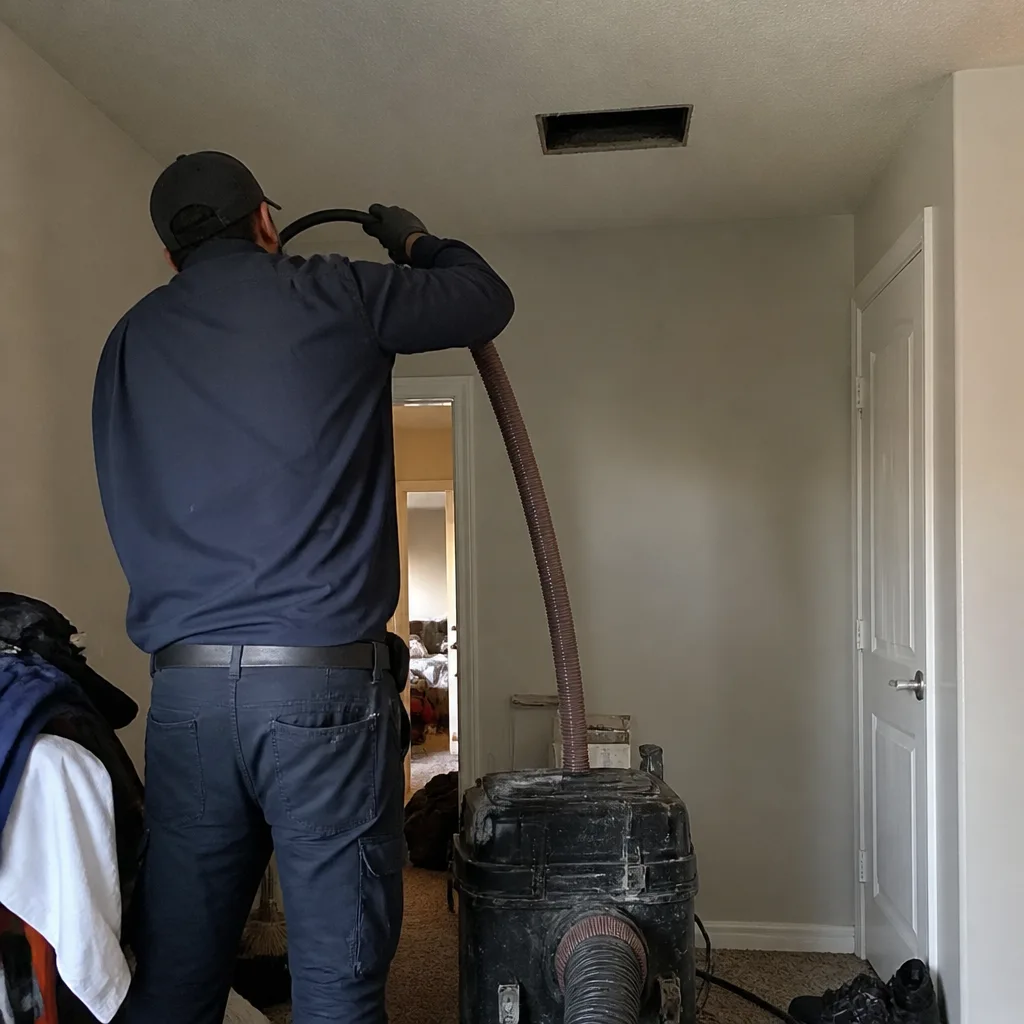 Before
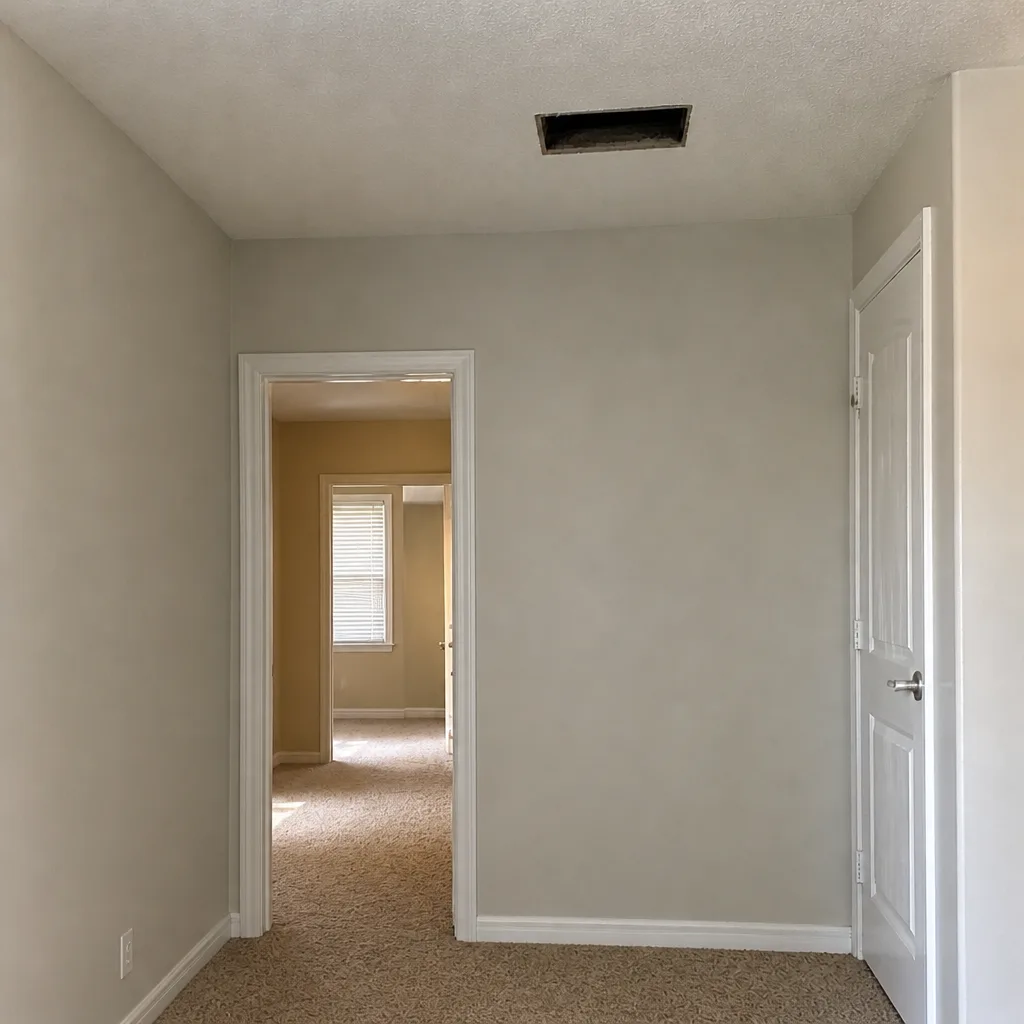 After
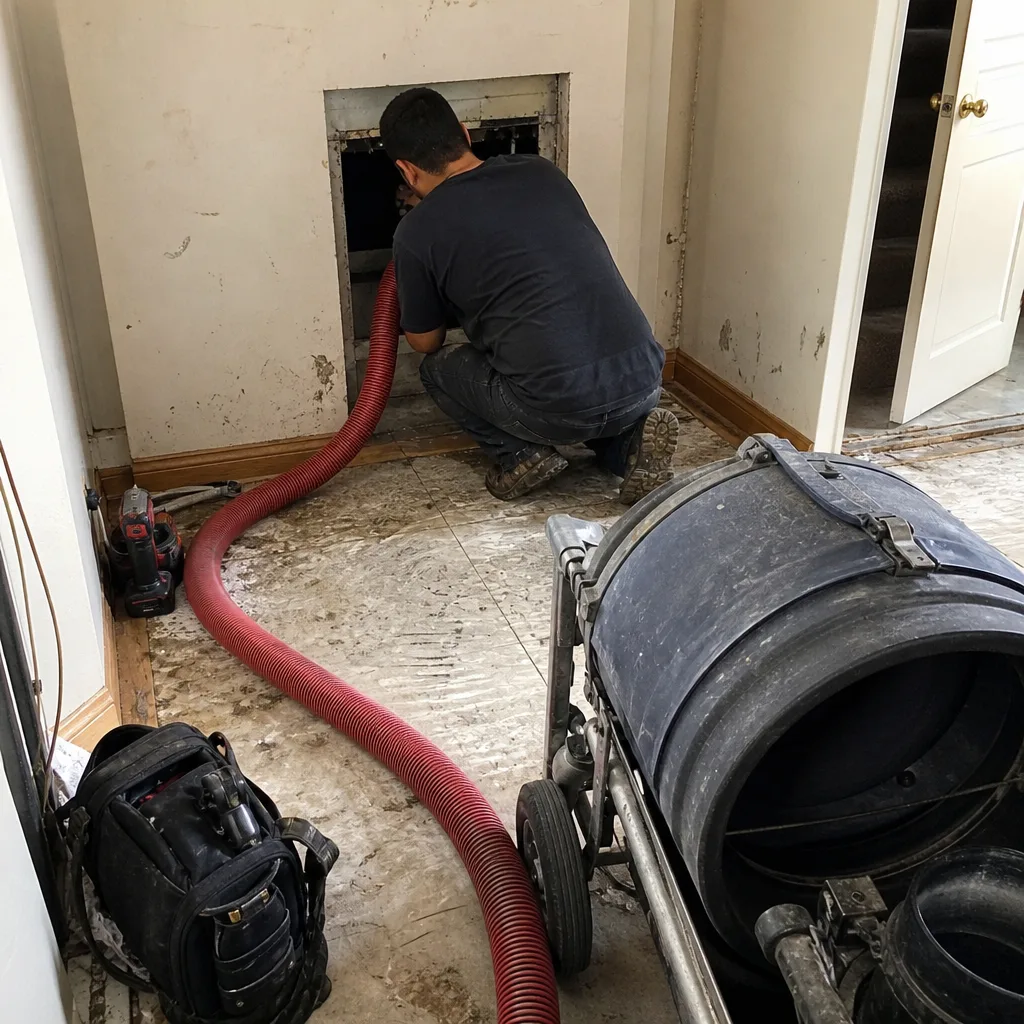 Before
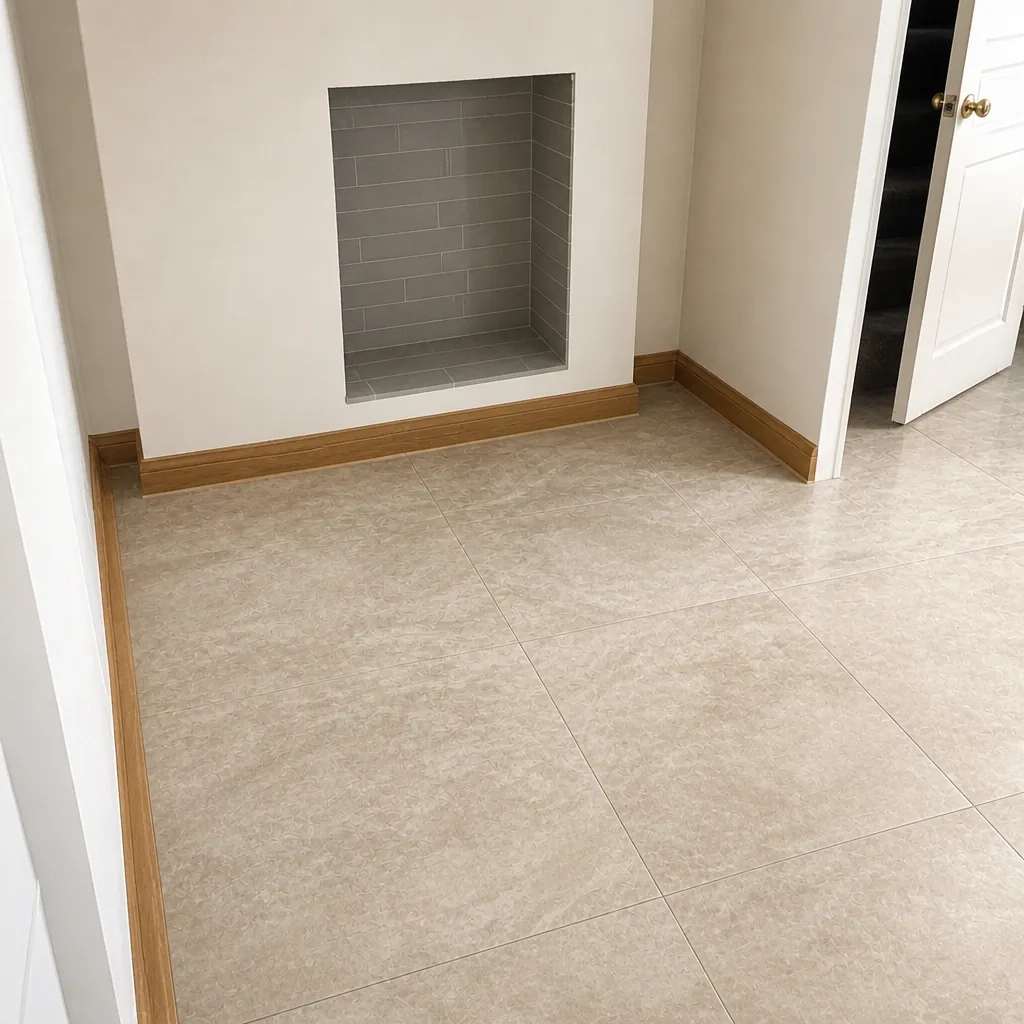 After
When to Call a Professional
Call a professional when the complaint isn’t “my registers look dusty” but rather “the air in my house feels different.” Specifically: after a renovation, when dust and construction debris have settled into the return plenum; when musty odors appear at registers or return grilles; when allergy symptoms worsen indoors and the rest of the home has been ruled out; when you’ve owned the home for more than a few years and there’s no record of a full cleaning; or when a dryer vent won’t clear from the accessible section. Those are the conditions where consumer tools reach their limit and professional equipment with containment is the only productive path. If the visible problem is new, or your system hasn’t been cleaned in recent memory, the professional visit is the honest answer.
Herriman Air Duct Cleaning Pros offers free estimates in Herriman. Call (844) 443-4862. We answer 24/7. Fast dispatch from 7am to 7pm, Sunday through Friday.
Frequently Asked Questions
Yes, for maintenance tasks on the parts of the system you can physically reach: registers, grille faces, the filter housing, and the first few feet of the dryer vent run. Those tasks genuinely extend the life of a clean system. What DIY doesn’t do is clean the main trunks, return plenum, or air handler box, which is where most contamination settles. If your ducts are already clean and you want to keep them that way, DIY is a real option. If they haven’t been cleaned, DIY won’t fix the underlying problem. Call (844) 443-4862 for an exact quote. Estimates are free.
You can. The most common damage is flex duct seams pulled apart by a drill-mounted brush, and debris pushed past a branch-trunk junction into a section you can’t reach. Both make the subsequent professional cleaning longer and more expensive. A separated joint also leaks conditioned air into the wall cavity, which becomes a separate repair. If the brush feels like it’s fighting a bend or a seam, stop. Call (844) 443-4862 for an exact quote. Estimates are free.
Most guidance points to every three to five years for a typical home, with faster cycles after a renovation, a move-in to a home with unknown history, or when a pet or allergy situation increases indoor dust loading. Herriman’s dry, wind-driven dust conditions tend to push the upper end of that range. The honest answer for your home depends on what’s happening on the return side of the system. A quick assessment tells you more than a generic timeline. Call (844) 443-4862 for an exact quote. Estimates are free.
Cheaper quotes usually mean a different scope: branch runs only, no negative pressure containment, or no cleaning of the return plenum and air handler box. That’s not the same job at a lower price; it’s a smaller job at its actual price. The low quote books a visit, but the parts of your system that most need cleaning don’t get touched. Ask what equipment is used and whether the plenum is included before comparing numbers. Call (844) 443-4862 for an exact quote. Estimates are free.
Before-and-after photos of your own duct interiors, taken during the visit. A professional-grade cleaning shows visible evidence on camera, and any crew equipped to do the work is set up to document it. If a quote turns into a visit without photo documentation, ask for it before payment. Our crews keep before-and-after photos on file for every cleaning and share them before leaving. Call (844) 443-4862 for an exact quote. Estimates are free.
Reducing settled debris in return lines and plenums reduces what gets stirred back into the airstream each time the system runs, which is a meaningful step for indoor air quality. It isn’t a substitute for filtration improvements or medical advice, but in our experience it’s a foundation: any filter upgrade works better on a clean system. If pollen-season allergies are your concern, a cleaning before the season starts plus a properly rated filter is a reasonable combination. Call (844) 443-4862 for an exact quote. Estimates are free.
The Bottom Line
Consumer tools can maintain a clean duct system. They can’t clean a dirty one, because the parts a homeowner can reach are the least contaminated parts, and the parts that need cleaning require equipment no consumer can rent. If your Herriman home has visible dust, musty odors, recent renovation residue, or no cleaning in recent memory, hire the professional visit. If your system is clean and you want to keep it that way, register cleaning, filter maintenance, and accessible dryer vent work at home are genuinely worth your time. The right equipment changes everything, and the right decision depends on which of those two situations you’re actually in. If you’re not sure, call for a free estimate and get a straight answer based on your actual system.
Every airflow problem, one visit. From Herriman Air Duct Cleaning Pros to air duct cleaning, dryer vent cleaning, and HVAC cleaning, we cover all five service categories: cleaning, sanitizing, repair, sealing, and dryer vent safety. Meet one specialist company that works with Honeywell and Aprilaire air quality systems and brings commercial-grade Rotobrush, Nikro, Abatement Technologies, and Guardsman-level treatments to a residential job. One flat price per system agreed before work starts. Before-and-after photos of your own ducts. Our technicians have up to 9 years of experience.
Call (844) 443-4862 for a free estimate on air duct cleaning in Herriman. We answer 24/7. Fast dispatch from 7am to 7pm, Sunday through Friday. Closed Saturday.
Written by the team at Herriman Air Duct Cleaning Pros.