
Last updated November 23, 2026
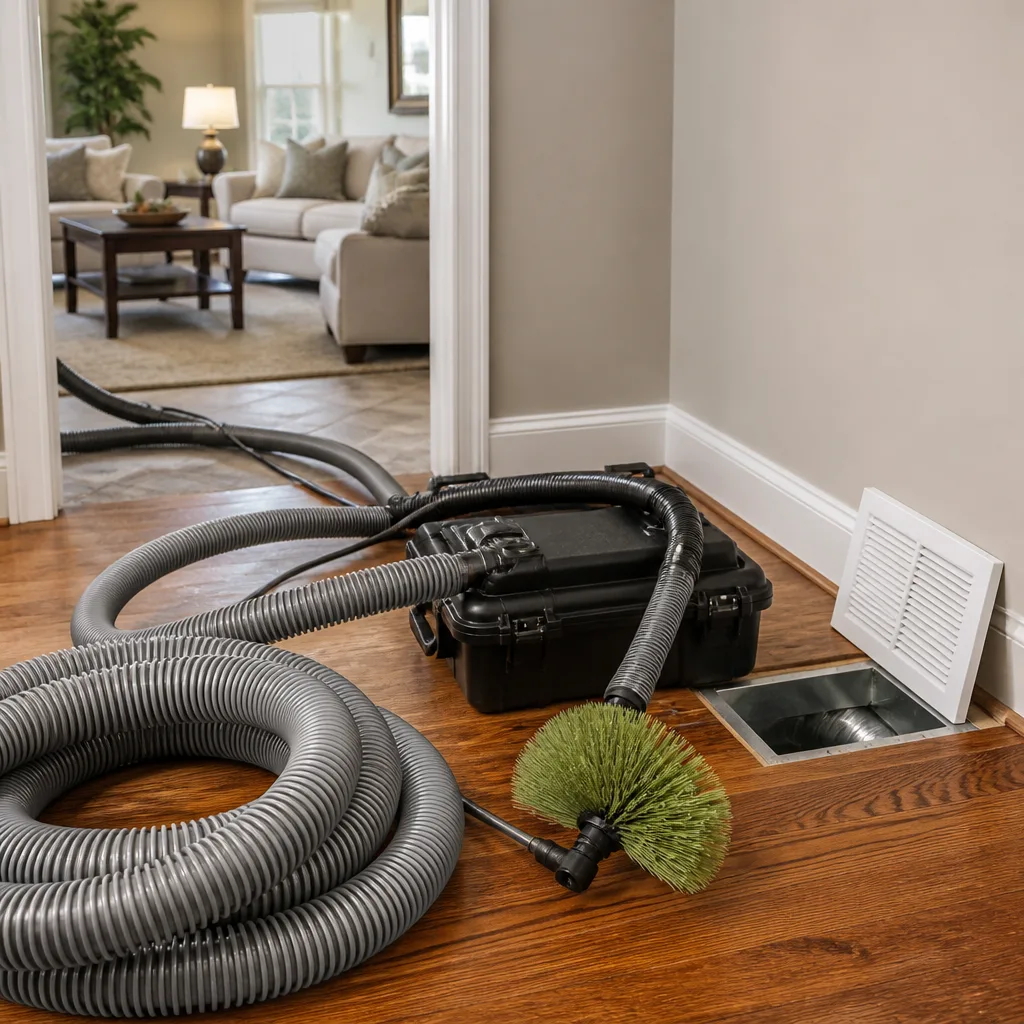 Whole-home duct cleaning
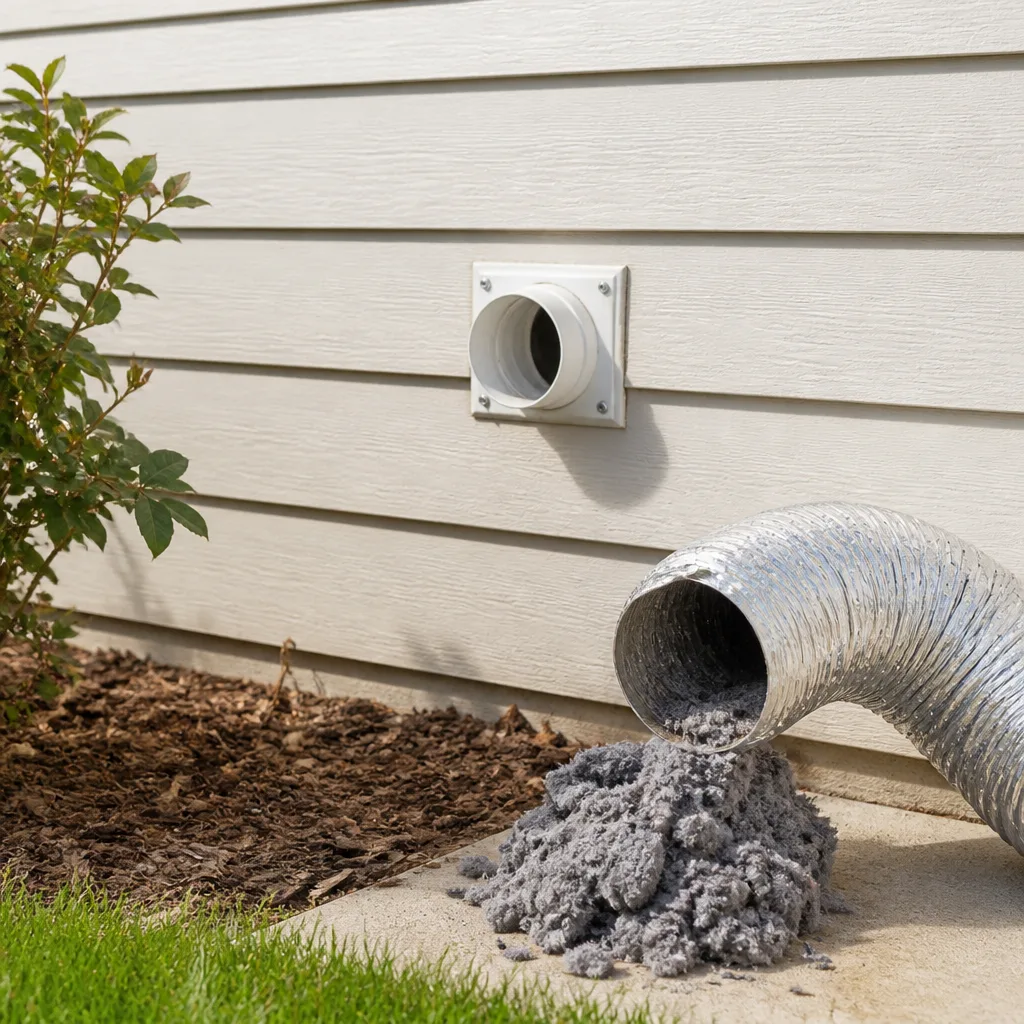 Dryer vent cleaning
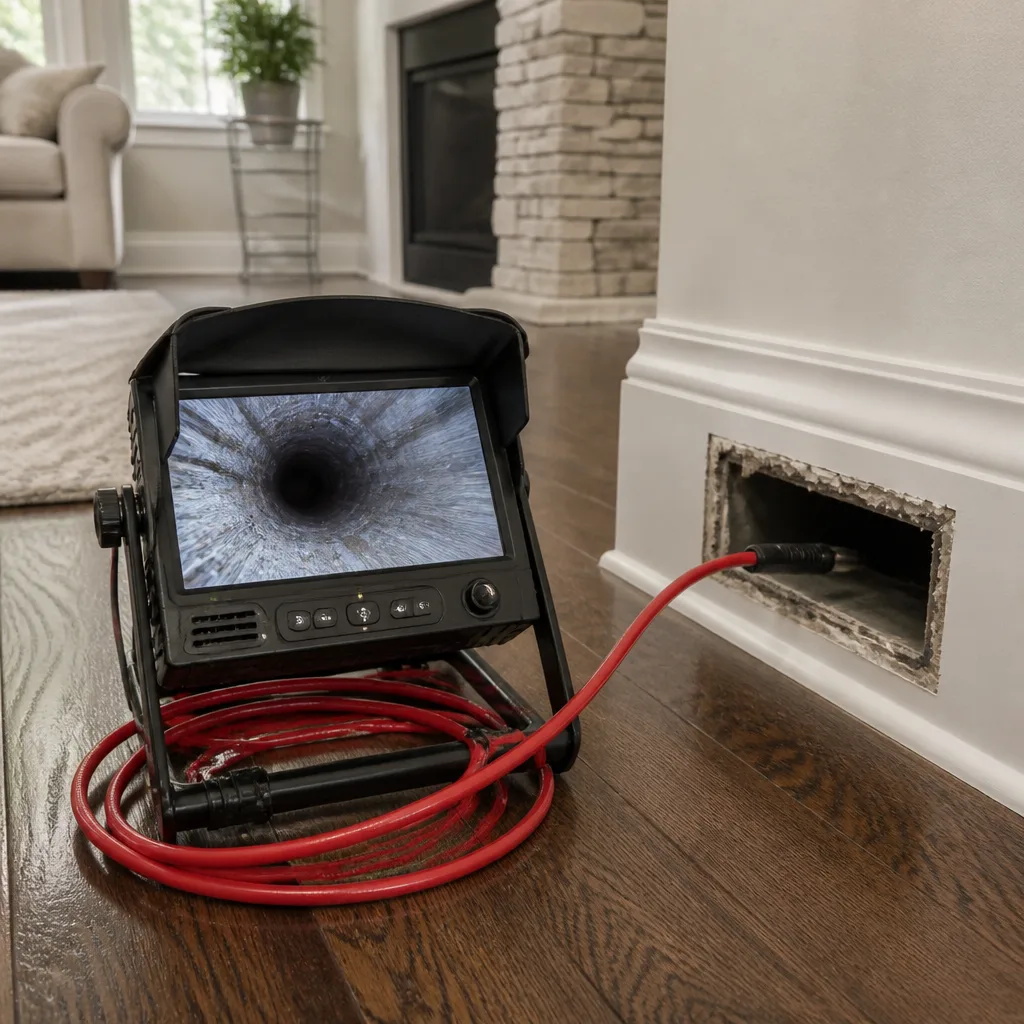 Camera inspection
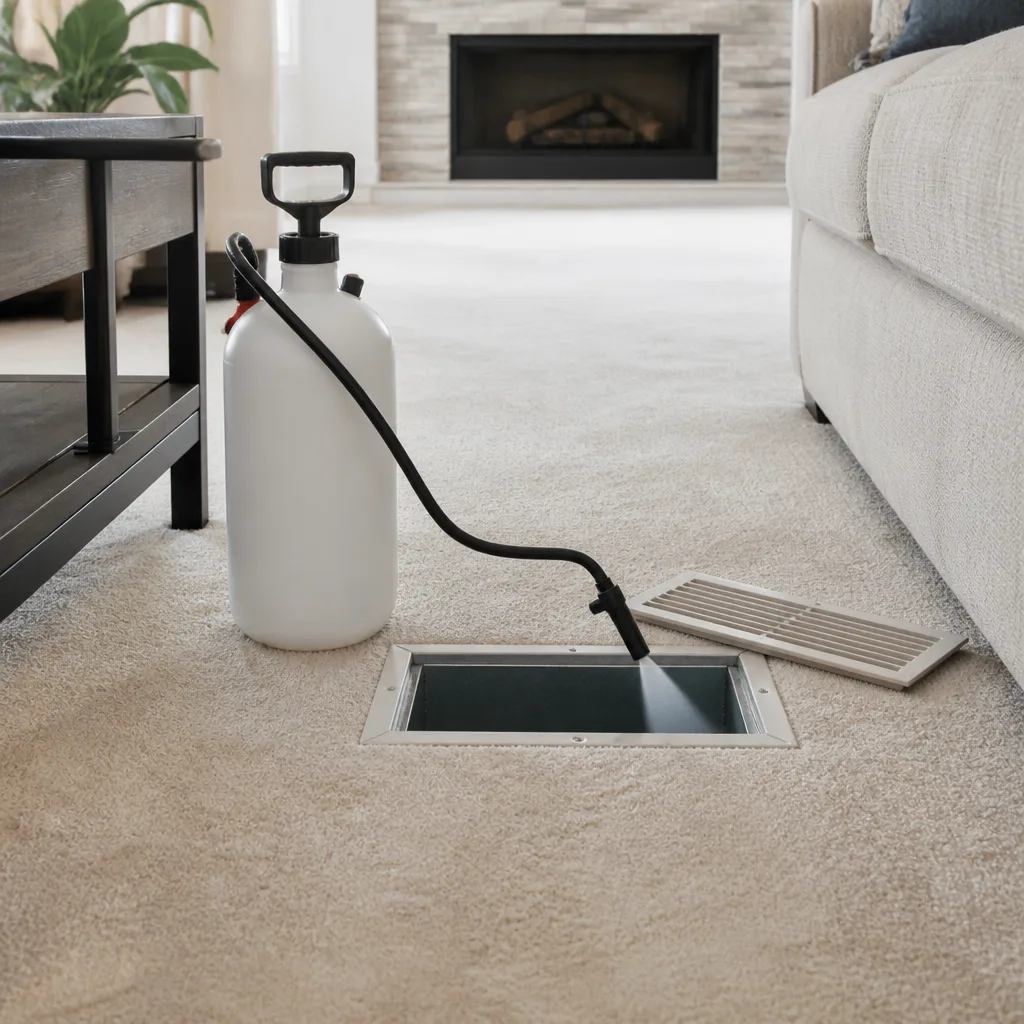 Sanitizing & deodorizing
Whole-system duct and dryer vent check with before-and-after photos - you see exactly what came out of your vents
That "$99 whole-house special" is a bait ad - the real number appears once they are in your hallway, or the "clean" is a shop-vac at the register. We photograph the inside of your ducts before and after instead.
The Complete Guide to Air Duct Cleaning in Herriman
Most air duct guides are written for the average American home. Herriman isn’t the average American home. This city sits at roughly 4,900 feet in high desert, ringed by graded lots and new subdivisions, inside one of Utah’s fastest-growing construction corridors. That geography changes how dust loads, where debris settles, and how often your ducts actually need attention. A guide written for a humid climate will get the timing wrong and the method wrong.
What follows is the process mapped to Herriman conditions: what contaminates ducts here, what a real cleaning involves, and how to verify the work before anyone packs up equipment.
Quick Answer
Air duct cleaning in Herriman means removing accumulated dust, construction debris, and settled particulate from the entire duct system using negative-air and mechanical agitation equipment, then verifying the result visually. Because of high-desert dust, clay soil tracked in from graded lots, and heavy new construction, many Herriman homes need cleaning sooner than the national “every three to five years” guidance suggests – particularly homes under five years old.
Styles & brands we work with
- Whole-home duct cleaning
- Dryer vent cleaning
- Camera inspection
- Sanitizing & deodorizing
Table of Contents
- Why Herriman Ducts Get Dirty Differently
- What Commercial-Grade Equipment Actually Does
- Source Removal vs. Air Wash: What Counts as Cleaned
- New Construction and Drywall Dust
- A Step-by-Step Look at a Thorough Cleaning
- How to Verify the Work Was Done
- What Duct Cleaning Costs in Herriman
- How Often Herriman Homes Really Need It
Why Herriman Ducts Get Dirty Differently
Herriman’s soil is the first thing to understand. Much of the city sits on clay-heavy ground that was graded and disturbed during development. That clay doesn’t blow away like sand – it dries, breaks into fine particulate, and gets tracked into homes on shoes and drawn in through return air. Once it settles inside ductwork, it doesn’t leave on its own.
Layer on top of that the regional PM10 load. High-desert valleys hold fine particulate in the air longer than wetter climates do, because there’s no regular rain to wash it out. Every time a furnace or air handler runs, it pulls that particulate through the return system and the filter catches most of it – but not all. The fraction that passes through settles on duct walls, joints, and plenum surfaces, and it builds faster here than in a climate with more humidity and precipitation.
Herriman’s growth adds a second source. When subdivisions expand, there’s active grading, road work, and construction traffic nearby for months or years. Homes that back onto undeveloped parcels or active build sites pull in more airborne debris than a settled neighborhood would.
Practically, this means:
- Dust loading in Herriman ducts tends to be heavier and finer than in wetter climates.
- Return-air trunks and plenum surfaces collect the most, because that’s where velocity drops.
- Homes near active construction see faster accumulation regardless of filter habits.
- Clay particulate is abrasive and sticks; simple vacuuming at the register doesn’t remove it.
What Commercial-Grade Equipment Actually Does
The gap between a professional duct cleaning and a cheap one is usually equipment. A shop-vac rig generates modest suction and can’t maintain negative pressure across a whole system. Professional setups use high-volume negative-air machines that hold the entire duct network under vacuum while mechanical agitation loosens debris from the walls.
Our technicians use Rotobrush and Nikro systems, which combine rotary brush agitation with high-flow vacuum. We also work with Abatement Technologies air filtration equipment – gear built for commercial remediation, where containment and HEPA-level filtration are baseline requirements rather than upgrades. That matters in a Herriman home because fine clay and drywall particulate is exactly the kind of material that escapes a weak vacuum and redistributes through the house.
Here’s the airflow comparison that explains why:
- A typical shop vacuum moves air in the low hundreds of CFM and loses suction as its filter loads.
- A rotary brush system paired with negative-air equipment maintains several hundred to over a thousand CFM through the trunk line while agitating walls.
- HEPA filtration on the exhaust traps the fine particulate instead of blowing it into the room.
- Containment at the registers keeps disturbed debris inside the system until it’s collected.
The right equipment changes everything about the outcome. It’s also why a twenty-minute “blow-out” at the registers doesn’t produce the same result as a full source-removal job.
Source Removal vs. Air Wash: What Counts as Cleaned
Not every company calling itself a duct cleaner performs the same service. The industry standard, set by NADCA guidance, is source removal: physically dislodging and collecting contaminants from the duct surfaces, then removing them from the building. Air wash is a different method – it uses high-volume air directed at duct walls to push debris toward a vacuum, and it’s a legitimate technique within a source-removal job when there’s enough velocity behind it.
What doesn’t count as cleaned:
- Wiping the visible inside of registers and calling it done.
- Running a vacuum at one vent while nothing agitates the duct walls.
- Spraying a sanitizer or fragrance over debris without removing it first.
- Skipping the plenum, the return trunks, and the air handler cabinet.
- Leaving no way for the homeowner to see the result.
A proper job touches the full system: supply runs, return runs, the plenum, and the accessible interior of the air handler. Agitation is mechanical (brushes, whips, or air tools), and collection is continuous. Sanitizing, when it’s done, happens after the debris is out – not instead of removing it.
This is the same standard we apply to air duct cleaning across Herriman, whether the home is a recent build or a decade old.
New Construction and Drywall Dust
Here’s the counterintuitive part: in Herriman, a three-year-old house often has dirtier ducts than a thirty-year-old one.
Drywall dust is the reason. When a home is finished, sanding and finishing generate enormous quantities of fine gypsum powder. Builders usually run the HVAC system during construction to control humidity and temperature, which pulls that dust straight into the ductwork. Even with filters in place, fine drywall particulate coats duct interiors, plenum surfaces, and the air handler. It’s alkaline, it’s abrasive, and it doesn’t blow out with normal operation – it settles and stays.
Add the construction traffic outside: graded lots, unpaved access roads, and neighboring builds. In Herriman’s expanding subdivisions, a new home can be surrounded by active site work for a year or more after move-in.
Signs a newer Herriman home needs attention:
- White or gray dust at the registers that reappears within days of cleaning surfaces.
- A musty or “chalky” smell when the system first kicks on.
- Visible dust streaks around supply registers or on nearby walls.
- Frequent filter changes that don’t seem to help.
Our technicians have up to 9 years of experience, and new-build duct contamination is one of the most common things we’re asked to correct. The fix is a full source-removal cleaning, not just register vacuuming.
A Step-by-Step Look at a Thorough Cleaning
What should actually happen during a professional visit? Here’s the sequence, in order:
- Inspection and assessment. Registers are opened and the system is checked for debris volume, duct material, and any disconnected or damaged runs. A camera goes into the trunk line to see conditions before anything is disturbed.
- Containment and setup. Negative-air equipment is connected at a strategic point, usually the main trunk, and registers are sealed with covers. The goal is to keep the whole system under vacuum before agitation starts.
- Mechanical agitation. Rotary brushes and air tools work through each run and the trunk, loosening debris from walls, joints, and fittings.
- Collection. Debris travels to the negative-air machine and HEPA filtration. Collection continues throughout, not in bursts.
- Plenum and air handler. The accessible interior of the air handler cabinet and the plenum are cleaned separately; these hold the heaviest accumulation.
- Sanitizing (optional but common). A surface treatment is applied after cleaning. We use Guardsman-grade protective treatments as a finishing step where appropriate, and can discuss whether Herriman Air Duct Cleaning Pros sanitizing fits your situation.
- Verification. Before packing up, the system is inspected again and the result is shown to the homeowner.
Depending on system size, the job usually takes a few hours. A second appointment is sometimes needed for homes with multiple zones or with duct repair and sealing work in the scope.
How to Verify the Work Was Done
You shouldn’t have to take anyone’s word for it. A real duct cleaning leaves visible, checkable evidence. Ask for these before the technician leaves:
- Before-and-after camera footage. A camera run inside the trunk line before and after agitation shows whether walls were actually cleaned.
- Photos of collected debris. The collection chamber should visibly hold what came out. If it’s empty, that’s a question.
- A visual check at the registers. Open a couple of supply and return registers together and look inside with a light. Walls should be clean, not coated.
- Particulate readings where available. Some setups can take a before-and-after particle count in the room. It’s a useful comparison but not a substitute for camera inspection.
- A written summary of what was cleaned, including the plenum and air handler if they were in scope.
“See the difference before we leave” is the standard we hold to. If a contractor can’t show you what came out and what the ducts look like after, the job is unverified.
We apply the same verification standard to HVAC cleaning, where the air handler and coil surfaces matter as much as the ducts themselves.
What Duct Cleaning Costs in Herriman
Honest pricing for duct cleaning doesn’t come from a coupon. It comes from a written estimate based on your system: how many runs, how many zones, how much debris, and whether repair, sealing, or sanitizing is involved. Per-vent pricing is a red flag – it rewards the contractor for a bigger system and not for a better job.
It’s also worth knowing that one flat price per system, agreed before work starts, is the standard we hold to. That’s what protects a homeowner from the classic pattern: a low advertised number that turns into a much larger invoice once the technician is on site.
What drives the price up or down:
- Number of supply and return runs, and how many systems or zones the house has.
- Access – ducts in tight crawl spaces or long runs cost more labor time.
- Debris volume, which is higher in new builds and in homes near active construction.
- Whether duct repair or sealing is needed before cleaning can be effective.
- Whether sanitizing or protective treatment is added afterward.
For an exact figure for your Herriman home, call (844) 443-4862. The estimate is free and the written estimate sets the final price.
How Often Herriman Homes Really Need It
The national guidance of every three to five years doesn’t account for high-desert dust or active construction. In Herriman, the practical answer is: inspect rather than schedule blindly, and clean when you can see or smell a reason.
Suggested starting points:
- New construction homes: clean within the first year or two after move-in, once the bulk of drywall and construction dust has settled.
- Homes near active build sites: inspect annually, clean when register dust reappears quickly after cleaning surfaces.
- Homes with pets or allergy sufferers: inspect every two years.
- Established homes with no issues: inspect every three years and clean if debris is visible.
- After any major renovation: clean once the work is done, regardless of the last cleaning date.
Dryer vents follow a different schedule entirely and are a separate safety matter. Lint buildup is a fire risk and doesn’t show up in duct inspection. Pairing dryer vent cleaning with a duct appointment addresses both airflow hazards in one visit.
Common Mistakes to Avoid
- Choosing a quote based on the advertised price alone. A per-vent teaser figure is usually a starting number, not the real one. Ask for a flat price per system in writing before anything is scheduled.
- Assuming a new home has clean ducts. Given how much drywall dust builds up during construction in Herriman subdivisions, a three-year-old home often needs cleaning more urgently than an older one. Have a new-build system inspected before assuming it’s fine.
- Accepting a cleaning with no verification. If nobody runs a camera or shows you the collected debris, you have no way to know the walls were cleaned. Ask for before-and-after footage.
- Letting a sanitizer replace actual cleaning. Spraying fragrance or treatment over debris traps it, it doesn’t remove it. Cleaning first, treatment second.
- Skipping the plenum and air handler. The heaviest accumulation often sits in the plenum and cabinet, not in the supply runs. Make sure they’re in scope.
- Forgetting the dryer vent. Lint accumulation is a separate hazard that duct cleaning doesn’t address. If it’s been more than a couple of years, get it cleaned at the same time.
- Ignoring small duct leaks and disconnected runs. A gap in the system pulls dusty air from unconditioned space. Repair and sealing should come before or with the cleaning, not after.
See the difference
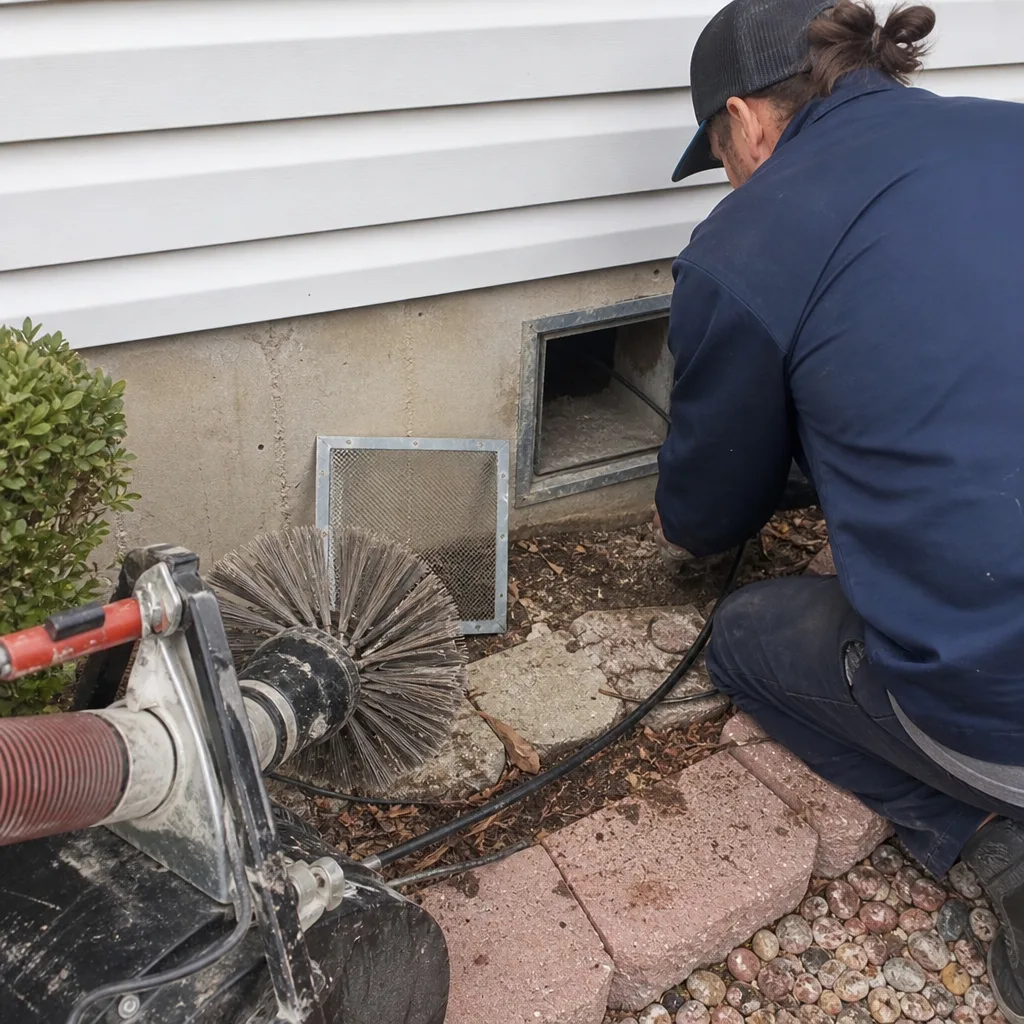 Before
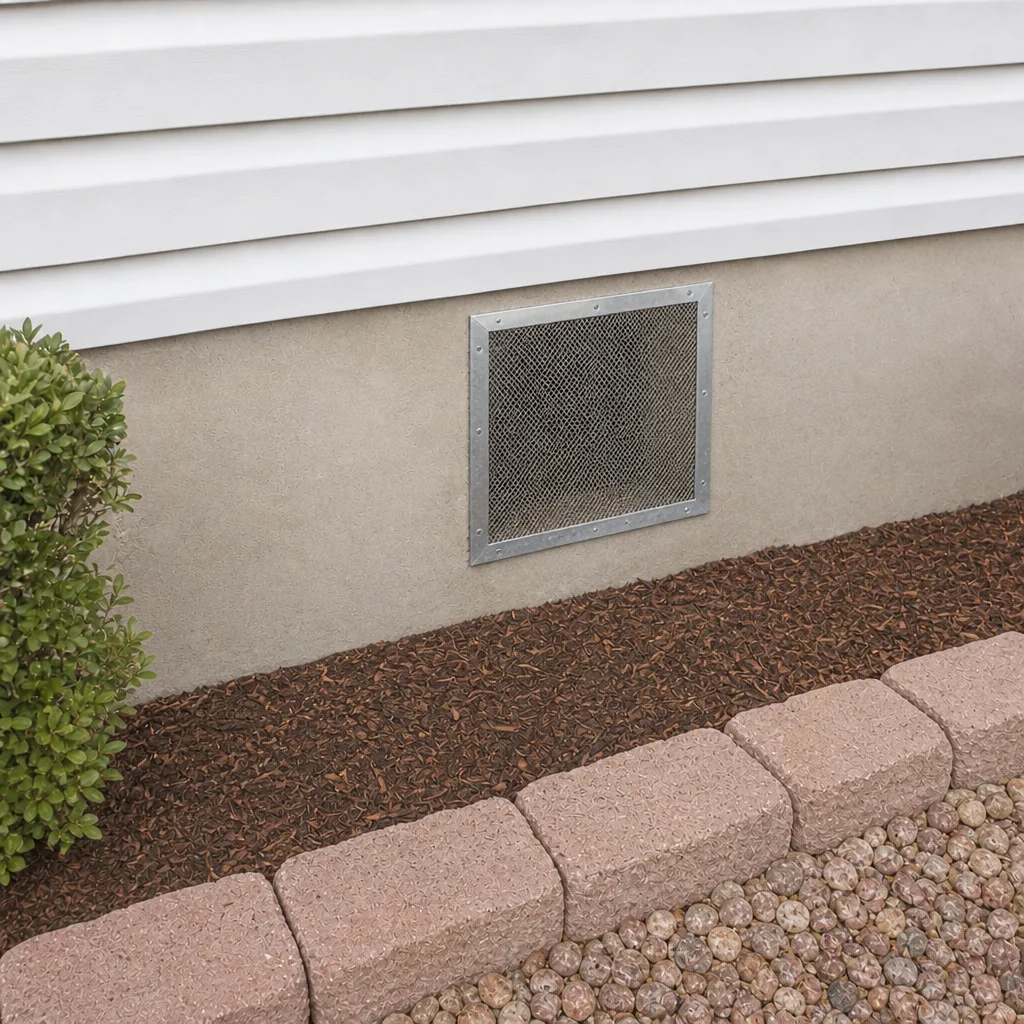 After
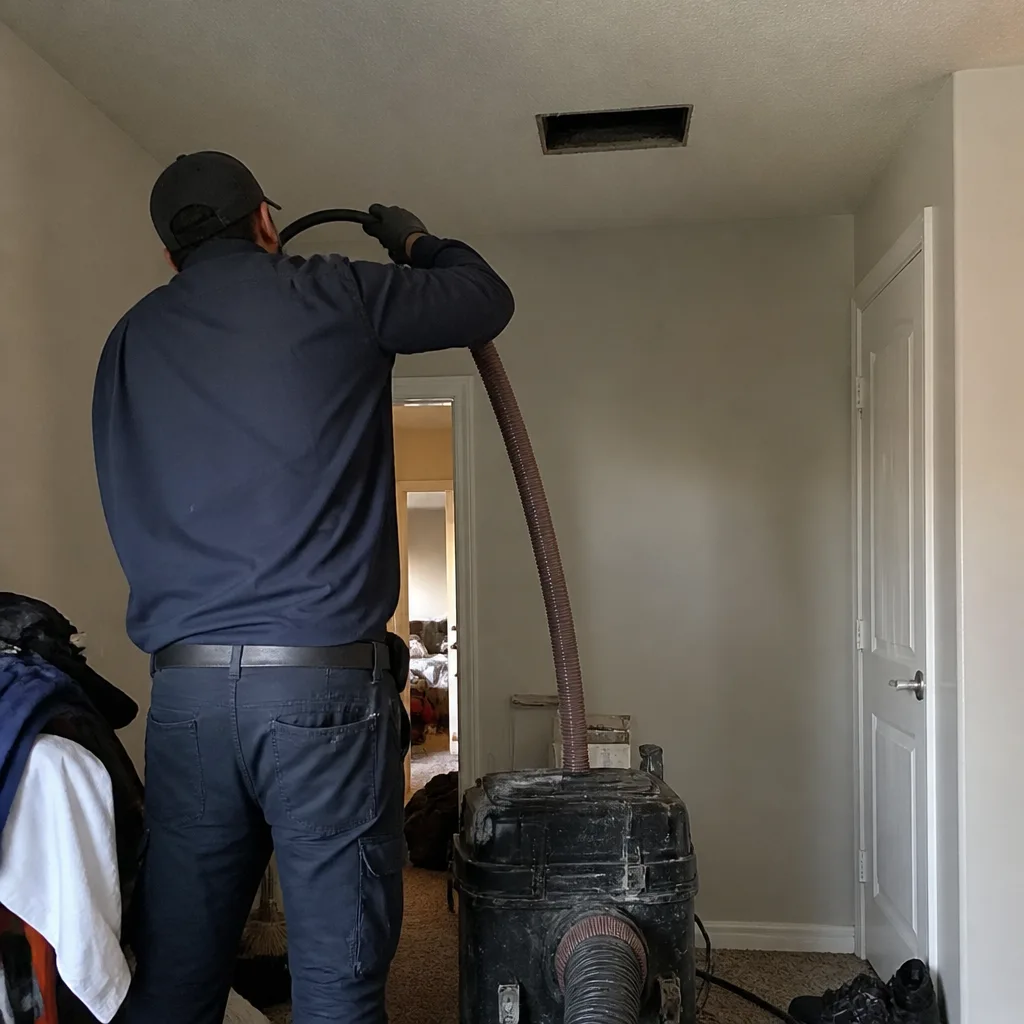 Before
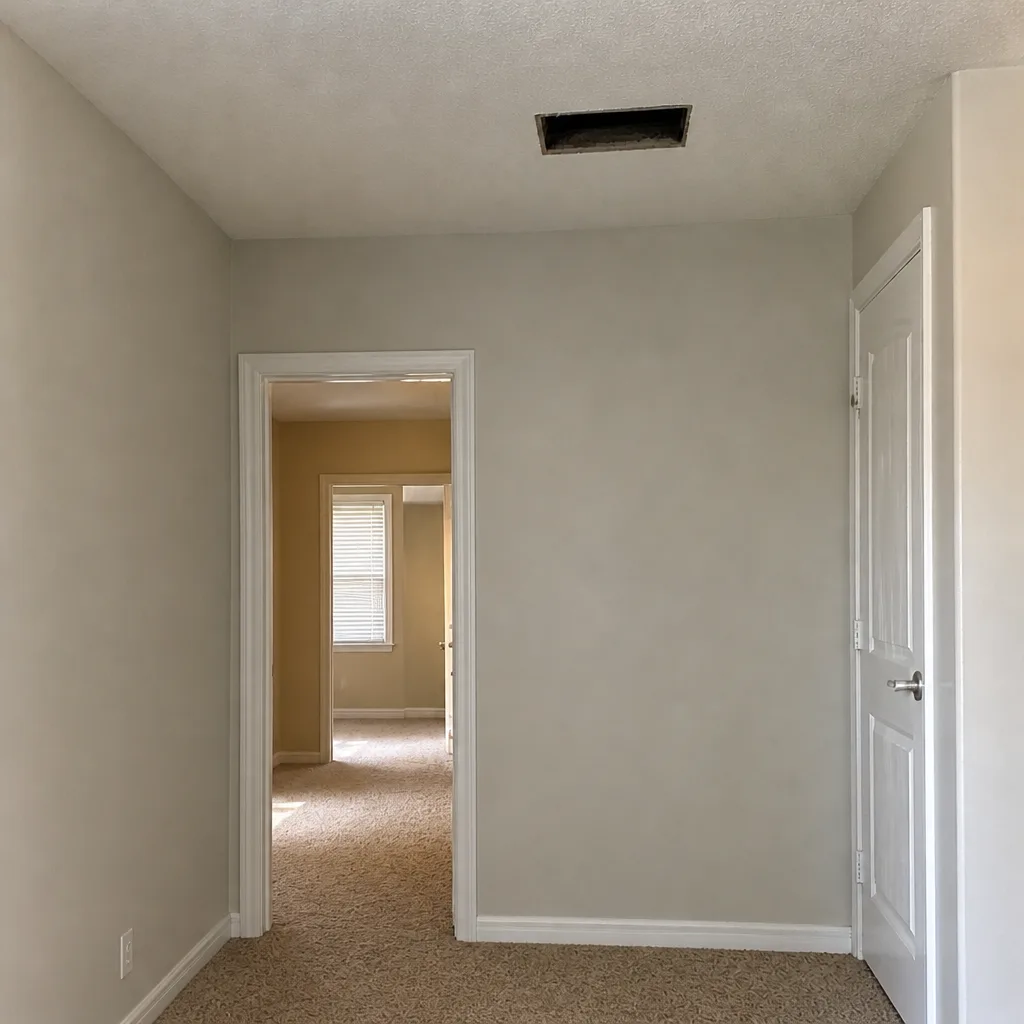 After
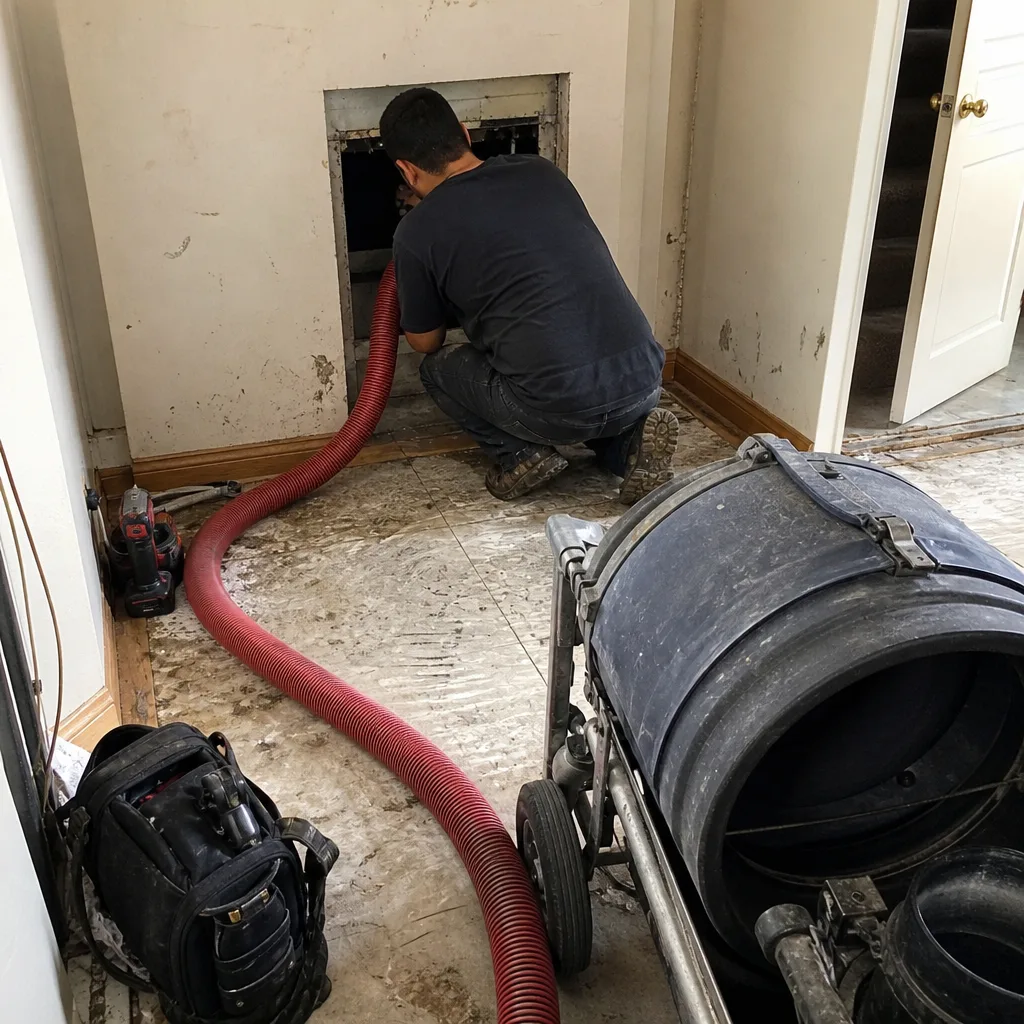 Before
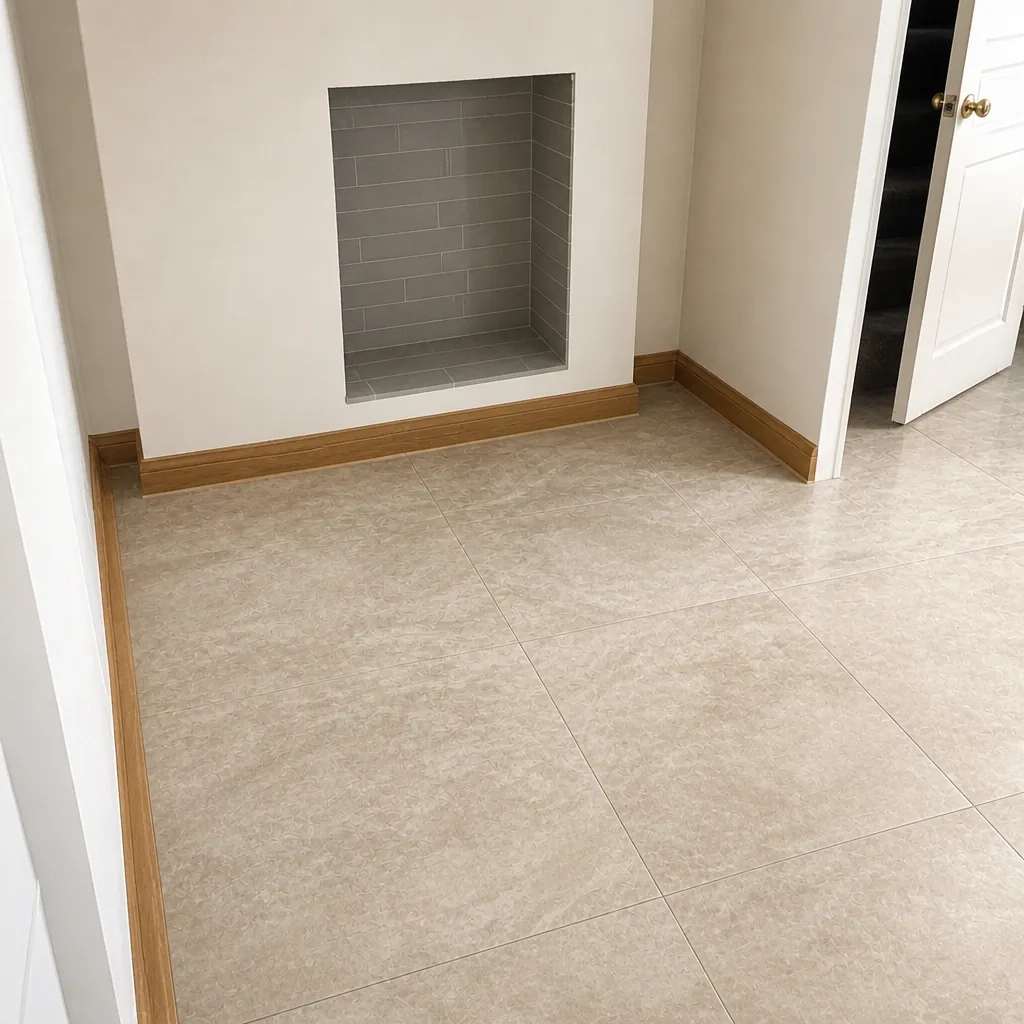 After
When to Call a Professional
Most Herriman homeowners don’t need a scheduled annual cleaning. They need to call when the signs show up. Call us if dust at the registers reappears within days of wiping it away, if there’s a musty or chalky smell when the heat or AC first runs, or if visible debris is sitting in the supply or return openings. Call after a renovation or within a year of moving into a new build. Call if you’re seeing more allergy symptoms indoors than out. And call if a previous cleaning left you with no proof of what was done.
Our technicians have up to 9 years of experience and work with Rotobrush and Nikro equipment on every job. Herriman Air Duct Cleaning Pros offers free estimates in Herriman – call (844) 443-4862. We answer 24/7. Fast dispatch from 7am to 7pm, Sunday through Friday.
Frequently Asked Questions
Cost depends on the number of runs, zones, debris volume, and whether repair, sealing, or sanitizing is included – there’s no single flat number for every home. The honest answer is that you should get a written estimate based on your system, with one flat price per system agreed before work starts. Call (844) 443-4862 for an exact quote – estimates are free.
Because they’re usually not for the same job. Low quotes often cover register vacuuming or a quick air wash without full mechanical agitation, negative-air containment, or plenum cleaning. Some add per-vent charges or additional fees once the technician is on site. Ask what’s actually included in scope, and get it in writing before scheduling.
Ask for camera footage inside the trunk line before and after, photos of the collected debris, and a look inside a couple of registers while the technician is still there. A real cleaning produces visible evidence. If nobody can show you what came out, the job is unverified – and worth questioning.
More often than national guidance suggests, because high-desert dust and construction in the area load ducts faster. A practical approach is to inspect every one to three years depending on your home’s situation: new builds within the first year or two, homes near active construction annually, and established homes every three years. Call (844) 443-4862 for a free estimate if you’re unsure where your home stands.
Often yes – newer homes frequently need it more. Construction drywall dust settles in duct interiors during the build, and neighboring site work keeps generating particulate after move-in. An inspection will tell you whether a cleaning is warranted.
Removing accumulated dust, clay particulate, and drywall debris from your duct system reduces what gets recirculated into the living space. It’s not a medical treatment, and results vary, but many homeowners notice less dust settling on surfaces and fewer irritants in the air after a thorough cleaning.
Yes. Dryer vent cleaning is part of our scope, and pairing it with a duct appointment handles both airflow hazards in one visit. Lint buildup is a separate fire risk that regular duct cleaning doesn’t address, so it’s worth including if you haven’t had it done recently.
We serve homes throughout Herriman and the surrounding southwest valley. Call (844) 443-4862 to confirm coverage for your address. We answer 24/7. Fast dispatch from 7am to 7pm, Sunday through Friday.
The Bottom Line
Herriman’s high-desert dust, clay-heavy soil, and fast construction cycle make local duct contamination different from the national average – finer, heavier, and faster to build up. That’s why a proper cleaning here means full source removal with commercial-grade equipment, not a quick vacuum at the registers. Look for mechanical agitation, negative-air containment, plenum and air handler coverage, and verifiable before-and-after evidence. If a contractor can’t show you the result before they leave, that’s your answer. Ask for one flat price per system in writing, watch for per-vent pricing, and don’t assume a new home has clean ducts. Herriman Air Duct Cleaning Pros offers free estimates in Herriman – call (844) 443-4862. We answer 24/7. Fast dispatch from 7am to 7pm.
Written by the team at Herriman Air Duct Cleaning Pros.